
The Fog of War


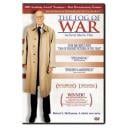 In this grimly compelling film, documentary filmmaker Errol Morris tackles one of his most perplexing and ambiguous subjects: former defense secretary Robert McNamara, widely identified (and in many quarters reviled) as the architect of the Vietnam War.
The octogenarian McNamara, a former head of Ford Motor Co. whose government service began during World War II, is filmed via Morris's invention, the Interrotron, a device that allows interviewer and subject to look into each other's eyes while also staring directly into the camera lens.
This enables the subject to maintain eye contact with the audience, and given the frequently disturbing nature of McNamara's revelations, it makes for quite an eerie viewing experience.
He discusses at length the Allied campaign against Japan in WWII, the Cuban Missile Crisis, and the costly, protracted conflict in Vietnam. From his musings Morris extrapolates 11 lessons, which are presented one at a time to impose film structure.


Remember Ohio State.
I found this documentary incredibly enlightening and even if the guy has an immense number of flaws as do we all, I found it reassuring to see a politician tear up and show emotion. Proof that they are still human and do care to a degree which at times seems to be the opposite. Also to think about the wrongdoings of our adversaries in past wars and those who have been persecuted for war crimes and thinking now about what our government officials ordered our men to do is a scary thought. If WWII had gone another way, all those men that are revered and compared to now would have had the same fate as those we in america prosecute. Whatever your position, its a great documentary and lots of food for thought. I watched it for research for a paper for my Bachelor Program and it has truly piqued my interest and has made this paper substantially easier to write.
Darn good doc. The Wiz Kids were spot on in WWII had 'er down to a science then dropped the ball on "Nam. At least he admitted it, that the whole damn thing was wrong but boy you couldn't tell 'em that then, even though everybody my age (turned 19 over there) knew it.
History is wirtten by the winners
Ol Bobby hears the death knell and his hands remind him of MacBeth. He doesn't have the conscience to be driven mad by it though. Through the ravages of age he battles on to rationalise. There was a great welcome party in hell in 2009. I would have enjoyed a grilling on world bank policies. He states war is difficult to make decisions about, which most people cant argue with based on experience. How about economic policies that led to the greatest ever wealth for the west and its key non-west allies and utter devastation for everyone else. How difficult were those decisions? Burn baby burn.
I can't believe how simplistic McNamara's revelations are. Most of the monumental insights he offers are ideas most kids learn in grammar school. He was Ford's CEO and he had to invade an Indochinese country and kill a million citizens on their own homeland to discover things like...'Try to see things through the other guy's point of view' ???
guys remmember what he said.. 100megaton bomb was tested during the 60s.. the bomb they drop in japan is only in the 100kiloton yeild..
now its already the 21s century! even if they dont test anything they surely have a simulation of their most powerful bomb in the supercompunters so they know the yeild of todays bomb.. so the point is be good everyone we dont have any 2nd chance.
great, insightful, and very scary stuff. i think world war three will make ww 2 look like a pimple on a gorillas bum...
i belivr Jack Bauer was inspiered on him.... at least on the idea of " i know i´ve killed people but saved more lifes than if i hadnt done anything." I dont say its wrong or right but I belive humans get so distracted by the problem of others when we should be working on ourselves and being better persons. Sure you cant change humanity but you can change yourself!! ...
"It was interesting when he asked “What makes it immoral if you lose and not immoral if you win?”, as if simply being on the winning side gives you the moral high ground."
I think you are somehow implying that he was making a statement that he wasn't. He had just basically acknowledged that he was a war criminal for his part in the execution of bombing raids on urban centers of Japan. And yet he was not tried as a war criminal ... because the war was won. He is not saying it made it moral ... you have to listen to more carefully :)
Not sure what the McNamara detractors were expecting. The guy is who he is and was who he was, and he doesn't seem very deluded about any of it. What would we have done in his shoes, with the eyes of the entire nation on us? Easy to say from my armchair :)
I'm sure all who watch(ed) this documentary can agree how great and powerful it is. McNamara is a man with many critics, and should be, but certainly those who have ripped him above must acknowledge he that he made these decisions after considerable moral searching. Has he made justifications? Of course - how could he not. These assertions of his war mongering, hypocrisy and lack of humanity are really unthoughtful and sophomoric.
I must address for the sake of those reading the reviews that have not watched the film, the line “What makes it immoral if you lose and not immoral if you win?” was a question asked by McNamara that he finds unable to answer, and was uttered in criticism of General Curtis LeMay. In addition, so far as the indecent comment regarding McNamara's seeming indifference to the death of thousands of Japanese - the question posed is, "Would you rather bomb thousands of Japanese, or invade with thousands of troops". Thousands would die either way, and McNamara seemed to have rationalized that he'd rather save the American lives than Japanese lives. I'm not saying he's right or wrong, but I think you have to understand that it was an ultimatum - one or the other. "Neither" was not a choice. I wonder what you'd say if Truman invaded Japan? Probably the same things you say about Vietnam. No easy answers.
And Lisa O, do you really wonder why he cried thinking about JFK dying? Have any of your close friends ever died? Or been murdered? Have some decency, please.
Great documentary.
I think all of you are missing the boat with this documentary. The war in Vietnam was in the context of the cold war. Just as Korea was in the 50s. But, the difference was that we used unilateral power in this instance opposed to acting as an UN agent in Korea. McNamera even admitted to this grave mistake and you can see how history repeats itself with the war in Iraq and Afghanistan. I don't think he lacks empathy, self-awareness, or even morality. Wars, unfortunately, are a natural cause of the current system we live in. Morality, simply doesn't exist in the international system. Its really sad, but thats the dog eat dog world we live in. Obviously, Vietnam was wrong and there was grave injustice. But, we only look at it like that now because we lost. Why do we not observe the same wrongs with Korea or the bombings of Japan? I think its because good things came out of those conflicts and nothing came out of Vietnam. Thats why he asked the question of "what makes it immoral if you lose and not immoral if you win?" I thought it was fascinating.
In my opinion McNamara made a few admissions of guilt but they were always followed by qualifications and they seemed a little begrudging. I don't think he really accepts responsibility for any of his decisions because he clearly felt that they were morally justified. He had a very philosophical aproach to morality and it's easy to see why because it's such a complicated thing. Having said that I still find it hard to understand how anyone can justify some of the decisions he made. It was interesting when he asked "What makes it immoral if you lose and not immoral if you win?", as if simply being on the winning side gives you the moral high ground. I'm sure he feels guilt but like the men who made the decision to drop the nuclear bombs in Japan or the men set the policies for global depopulation it's tempered by a self-delusional sense of righteousness which allows them to justify their actions to themselves
hearing war criminals speak is always, at the least, interesting.
strange its hard to know what to think after watching that. I noticed, like lisa o, how mcnamara could hardly hold the tears back thinking of jfk, but the dead of vietnam seemed to stop at johnson's door. I think the scariest thing is how fallible, human beings can reach such high office with such potential for damage.
In a way i feel that i would prefer if he still thought war in vietnam was right rather than claim he went against his better judgement but still helped unleash hell on so many people not least his own countrymen
well, lisa, I agree with you that war is hell and great evils have been made, for example in vietnam and iraq. but I have to disagree with you on mcnamara. to me (just from watching this film) he seems like a reasonable guy who found himself in a organism that was on the wrong path. of course he bares his part of the responsibility for being on the boat, and carrying out the policies, but I think the president who decided the main direction. neither do I think that mcnamara is a sociopath, we all feel much strongly about people we know, than faces on a screen, or numbers on a paper. again, I guess that's human nature, with all the evils it can bring
...and what was that whole bit about agent orange?! He didn't authorize it?! What?!!! He was the secretary of defense. Of course, he did. Whether he realized what he was doing or not, is a different story.
In addition, why is it that warmongers refer to what is legal for guidelines as to what is "wrong" or "right" in a war? I don't care whether it was legal or not. It is irrelevent! What is relevant is the damage it caused, and for what gains?
McNamara says evil is sometimes necessary for good. That is extremely dangerous thinking. It is the same type of thinking that allows for prisoners to be tortured at Guantanamo Bay. If you have to commit an act of evil to do "good", I think you seriously need to reevaluate your definition of "good" and your value system!
This is so disturbing to me. It goes to show that wars go on, because of misconceptions..basically it's all in their heads. Unfornately, the carnage is not. Though McNamara makes some important statements, and admits mistakes, I don't think he really feels bad.
Of course, no one can truly know what another thinks or feels (one of the points in the film), but I do not see evidence of true remorse. Sociopaths can intellectually understand wrong doing, but do not feel empathy. I don't know if McNamara is one, but I am guessing he probably is to some degree. Look at the way he gets so emotional when talks about Kennedy compared with the way he talks about burning thousands of men, women, and children to death as they slept.
I'm sickened to say the least. I really think there is a very grim future ahead for the US. If you believe in karma, the US is in big trouble. When are people going to realize, if we don't stop using war to resolve conflict, we are all going to wind up dead?
The film gives former US secretary of defence Robert McNamara a chance to explain some of the controversial decisions made during his political career and the consequences that lead from them.
He comes across as a man who has many regrets, and at certain points some very dark regrets. His discussion of the incendiary bombing of Japan revels a dissonance that while not quite denial, leaves me with the impression that he does feel a heavy responsibility for what happened in Japan.
He does not cover the Vietnam war in as much detail as WWII or Cuba. Which does not help his case.
In the end I feel that the film is an attempt at some kind of confession by McNamara, in these his final years. It is hard to not feel a certain empathy and respect toward him as a man who has learned from his mistakes. But what great mistakes he made.
A great insight into what it means to be human.