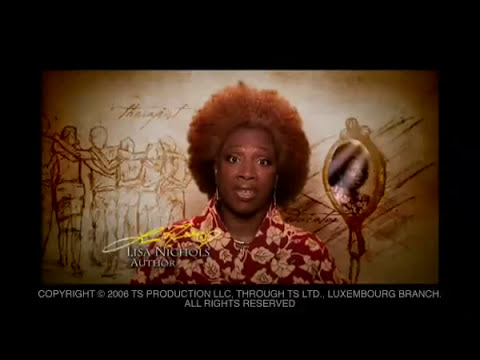
The Secret


The self-actualization phenomenon known as The Secret pivots on the time-honored new age notion of the Laws of Attraction: That is, think positively, and positive things will come to you.
This film, originally broadcast over the Internet, has been enhanced and extended for this DVD edition; but it retains the essential elements that have captivated millions.
Most of the material here is given in a straightforward manner, with the presenters simply talking into the camera to address the audience directly, which is good because it avoids the trap of pretense.
On the other hand, the quick edits between presenters (would it hurt to let them say more than one sentence at a time?) don't help because it reduces many of their points to palatable sound bites and aphorisms.
Directed by: Drew Heriot


This "documentary" is new age, empower yourself personal brainwashing. They do everything but read your chakra. And they might do that. I didn't finish watching it. I kept expecting someone to mention Hare Krishna. It's that ridiculous.
this seems like a fictional movie or something lol
How long is the full movie of the secret?? i mean how many hours?? I heared somewhere it's about 30 hours is it right???
It was for four years and it thought about her all four years and this dude above me is wow just hit it right on the spot
So why did I want this chick so bad and she obvi wanted me were still lit across the us fromeach other
curious did anyone else notice the demonic looking figure in the fireplace screen during the intro. It was only there for a matter of seconds but to me it seemed out of place for a new found philosophy suppose to be separate from God. For me it made me quite uncomfortable; from then on I was far more skeptical of the documentary's content. It seemed that it took a few too many christian beliefs and twisted them in a way that if one wanted a lie to seem to have weight they might toss in a few truths to make it more believable. The documentary appears to resonate with so many people because it gives them the spirituality security they have been searching for with out introducing the uncomfortably reality of God. Regardless of the merit of the message of "the secret", did any one else notice the face in the fireplace screen and find it to be a potential warning sign as I did?
Wow! I love this. And i am not talking about the book or a film or watever. I have neva read or watch ant of this. Infact, i have stumble on this forrum simply by typing "the verdict of a human sould is determined by the good vs bad energy it has enfluence on others" and all i wanted to know who else thinks like me in the world.. to mi, i feel life is not about relion or any particular faith. Life is about good common sense And vibrating it onto others. Now, + or positive is the greatest sign there is in the world today, according to me. Each thought, action or decision we make, comes to two possible out comes, positive or negative energy. Picture a number line, the "y" axis to be excactly. When we are born, we are just at zero,"the origin" and then we start growing towards childhood where we develop thinking capabilities and mostly influenced by our environment and a bit of the person's nature.. I believe, from this point if we were able to base our thoughts and decisions purely onthe positive side "up" side of the number line, the world would have been full of happiness. No sufering. No hunger. No poverty.. abundant good would have ruled th world.. but unfortunately right now is the oppoaite that is happening..
I am a firm beleiver of the Law of Attraction and the teachings taught by the teachers on the Secret. I am a live example of how you can transform your life using it..People can think that these kinds of things do not work but it is not true. It Works! :)
I recommend Anima to anyone who watched this. It's a bit more realistic and is way more inspirational. It's on here and youtube.
You may not believe or agree with everything in this movie, and thats perfectly fine, I wont argue. But bare in mind we don't fully understand how our world works yet, in fact we have a lot of unproven theories that are taught to us as fact. If you think you know everything, and this is just too dumb to be true, let go of your own arrogance and ignorance. I say this not to be mean, but because I had to do the same in my life.
So why not take something from this documentary and try to apply it to your life? What have you got to lose? A couple minutes of your time? If your affraid people will think you dumb for trying this, don't tell them... Lol. I personally think it would be silly not to try it, you have everything to gain and virtually nothing to lose.
Since I have been reading and kept it in practical, Wow it's amazing my incom is double I donot have to think another way to find the money, its all around me, so why not start using this method. Good luck
im a new commer when it comes to the secret ive been on a positive path for a month now .. just learing about it and what i can do for my life. im very excited to order the book so that way i can start fresh in my life well should say in my new life. alote of people think this is a joke but i feel that this will change the lives of those who really believe in positive energy. feel sorry for those who will never know that you can change your life with thoughts,feelings and actions.
hey dont just be optimistic actually expect the best
actually these are things that we all always know its like murphys law in reverse
prolly one of the most amazing things i ever heard! though i dont believe exatly how they do; it explains more closely what my beliefs are than any religion ive heard it makes sense for someone like me, who believes that
the whole universe was created by thought; in fact by a single thought or the first idea hey who had the first idea ever was there anything b4 that? or what if....
(open to suggestions)
There was a time, not so long ago, when people had ups and people had downs and we all went about our lives doing the best we could. Sometimes we were ahead, sometimes we were behind and jealousy was pointless since everyone seemed to move in this circle at different times.
Then along came this secret, that it's all in your head and your life is the way it is because you make it so, and everything went to pot. If you think that things will last forever in this finite world then you are an i*iot.
This secret has created a "divided class" situation, where those going through good times are afraid of people with problems. It has become impossible to receive or show compassion since people are so afraid that the negativity will somehow infect them. Nowadays we have those on a high running away from everyone who is dealing with life.
It can only end badly for those i*iots who oppress those who have reality to deal with.
This secret just dont work for me. Everytime I think positive, something negative always happen. For example I want one job desperately, I worked hard for it and well prepared for it. I was really very positive about it, did great in the interview cleared all rounds HR, Technical, Group interviews but still could not get it. I was thinking positive before, during and after the interview until I got the news. Moreover, not always but whenever I think negative I get positive results or at least it hurts less when things go wrong way. But still I will give one more short to the positive thinking.
I really need to get my head wrapped around with this...cuz I always think about the **** that's gonna happen to me if I screw up. I'm gonna change my ways of thinking now. It's gonna be difficult, but this video definitely got me into doing this. I'm gonna watch the full documentary soon and recommend it to my friends. A million thanks to the people who contributed to this idea/concept, you guys are amazing. God bless the people who are struggling with me right now.
Hey everyone, I am a girl from Sweden. Long time before this movie came out my mom has always told and still tells me to think positively, because thoughts are the power for our success or loss. I started writing down things that I want, I write down all my positive thoughts, wishes, dreams. Wrting helps me to concentrate more on what I wish for. Today I study medicine (for four years that almost was not possible), I have met my love (he is exactly how I always emagined him), I have friends (three good reliable friends, and that's enough believe me), my family is healthy and I'm getting rid of my other personal problems by thinking and writing positive things! Good luck to everyone!
this film taught people to be positive and never give up on the thing that I truly want by telling people to live like they have already had what they want. and if they doubt if this belief is true or not, the universe will not fulfill your wish. I have personally experienced something kinda same as this but still have no conclusion if it is true that the universe will conspire to help you to get what you want.
btw, awesome film.
It's on netflix instant watch! :D
I'm a big believer in positive thinking and even psychosomatic illness and healing, but the idea that every event in the cosmos can be ordered by thoughts is naive new age drivel that ignores practically every principle in physics, probability, and chaos theory. Obviously the way you think will influence the way you act, and thus how other people treat you, but expecting it to solve all your problems will leave you disappointed in the long run.
Self actualization comes from within the self, not from some documentary. The people that came up with "the secret" did it to make money. That's why this is only a 20 minute preview; to get you to buy the DVD. It makes me sick to think of them getting rich off of the dollars of insecure people.
I am a realist and things like religion (although has meaning and can provoke good in people) is a fairy tale of handed down stories (to me). The world is tough and I am typically negative to most things, because I see it for what it really is (in my eyes of course). I do not condemn people for their religious beliefs of differences of thoughts that break from the norm.
I have come to realize that we humans put off vibes to other humans, and if your vibe is negative, then negative results will come from that.
Being positive, supportive and open to peoples thoughts ideas and emotions would naturally create a gravitational pull towards you (figuratively speaking). Basically if you are pleasant, then you will find many friends. If you are negative then you will repel others.
If you act like a millionaire you have given yourself a better opportunity to become a millionaire.
I am in sales, and a story I always remember from a Jack Canfield book is this:
Jack too was an unsuccessful sales person, who had a successful mentor. jack was poor his mentor was rich. The rich mentor told Jack to act as if he was already successful and you will obtain your goals. He will then be successful in his sales approaches.
The rich mentor told Jack to go and buy a shirt that was way to expensive for his wallet, and then wear it in to the next meeting. Jack went and bought a shirt that was in excess of $100.00. Jack typically spent $20.00 on a shirt once or twoce a year. The shirt made him feel successful and worthy of selling his product to the people in front of him.
What did the shirt do? It put Jack's mind in a different state. A state that he was successful and in turn, made his presentation and sales pitch take on a different feel. Nobody in that room knew how much Jack had spent on that shirt, nor did they care, but Jack did and that was a difference maker. Jack came off positive assertive and accomplished because he was feeling better about himself.
If you do not know who Jack Canfield is, you have certainly seen his work. jack is responsible for all of the Chicken Soup books and is greatly successful, and he attributes his success in part to these theories.
If you are not where you want to be in life (such as me), why not try this theory? Many of us are afraid of success and find excuses and ways to keep ourselves from being successful. That sounds stupid, but with success comes responsibility and it is that that most are scared of.
You are where you are today because of your choices of yesterday. If you do not like where you are make a change. Start with being positive and see what happens.
I do not mean to preach because I am trying to change my ways and be more positive. I have faith that this theory works, not because it has magical powers, but simply because people and opportunities come to those who have a gravitational pull. That pull comes from being a person that others want to be around. The more people you are surrounded by the more likely hood your opportunities for a new job, a bigger sale, a good deal etc can come into your life!
Doesn't that just make sense?
i was too depressed from two three weeks but by watching THE SECRET am feelinng tensionfree.........it really works...///no words to appreciate it......i just can say wow....pretty good cocept
this was pretty good
Today i watched 'The Secret' and i like the concept within it very much.
The point of the doc, is to start thinking more positive and change our thoughts from negativ to positive. We all know that thinking about, winning the lotto wont work, but u change your chemistry in your brain when u believe something good will happen to u. before i hated my life, from the age of 14 till 23, always thinking negative, but one day i had enough and i changed my way of thinking and it really helped i'm only getting positive things in my life now and if something bad happens, i just look at it at a positive way, knowing that the problem will make me stronger in the end, everything i want in life is coming to me now. and who's stupid? them or the people who only think bad things will happen, enjoy your lives, don't waste it on negative thoughts. Have a great day :)
The point of the doc, is to start thinking more positive and change our thoughts from negativ to positive. We all know that thinking about, winning the lotto wont work, but u change your chemistry in your brain when u believe something good will happen to u. before i hated my life, from the age of 14 till 23, always thinking negative, but one day i had enough and i changed my way of thinking and it really helped i'm only getting positive things in my life now and if something bad happens, i just look at it at a positive way, knowing that the problem will make me stronger in the end, everything i want in life is coming to me now. and who's stupid? them or the people who only think bad things will happen, enjoy your lives, don't waste it on negative thoughts. Have a great day :)
This is astonishingly stupid. Don't get me wrong I think there is some level of truth to this, but to act as though we can just will things into being what we want is absurdly stupid and actually dangerous...
im just a pessimistic person. for me the glass is half empty. this video gave me the realization on just how screwed i am
Am gonna tell you a secret: "Sometimes I like to think in negative ways about reality because it makes me want to improve it somehow. Very seldom do I think in very positive ways because I don't care much for things and frankly I find most people to be pretty selfish. However, most of the time, my thoughts are neutral as I see things for what they really are (or as they appear to me anyway). Whatever is in front of you just is, not good not bad! And that's the way I like it! It actually makes me happy to go about life this way, can you believe it? Welcome to the Matrix hehe
I believe that positive thoughts have alot power......
I think a lot of people are missing the point regarding this documentary. This isnt really a normal self help kind of idea, regarding whats presented in The Secret (law of attraction). I agree that there is money being made by the film, and Im not crazy how they used money as the luring point for using the law of attraction.
This is really about whether you believe in the science behind it or not. Most of you believe positive thinking and hard work are all there is because its tangible to your current way of thinking and observing the world. But this goes much deeper and is trying to tell you that you are actually connecting to real energies that are handing forth your desires. No i dont believe sitting in you lounger for several months thinking and feeling intensely about having a Porsche is gonna get you one but it does set forth, an clear pathway that would almost seem supernatural.
Like Miguel said below, if we exist in an infinite amount of realties, the thoughts and emotions could be springing you into those dimensions where those desires become reality. Trying to achieve without following the laws of attraction leaves roadblocks, using the LOA removes them. The thinking and feeling removes the blocks and even places catalysts in your path accelerating the process.
Someone had mentioned earlier that if what was presented in this doc were true then every haulocaust victim was thinking negatively and created their own death. I mentioned that it was part of his own reality but had nothing to do with his own fate. But Ive thought about it and perhaps he is exactly right. The Jews have been persecuted for 1000s of years, therefore the collective conscious of the Jews was probably extremely dark and fearful.And with the creation of the 3rth Reich (sp?) the fears must have really been amplified. Ive thought the same could be true for races that tend to commit the most crimes, like African Americans. The collective mind set, which started in slavery is one of inferiority. Then with the civil war and intense racism the negativity intensified setting the stage for a mass self fullfilled prophecy in crime and violence.
Does this mean if i spend all day think about ladies i will eventually become one....?
??? link says watch the full movie here, yet its only the first 20 minutes? :/
In my case it's opposite.. bad things happen to me only when i am not conscious in opposite direction,, in terms of luck .. frequent example would be car fines, like parking,,. if i haven't worried at all and been late 10 mins.. i get booked.. so i kinda pretend to worry at-least for luck... lol
it's very nice it's relax my self . i love it because, it is such a nice video .......every one should watch this video and apply in their life. i fell so lucky after watching and applying it ...... i love u rehonda thank u soooo much
No one should need a book or movie to tell them "The Secret." If they really set their mind to their goals and believe in themselves, they will achieve it. If they don't then either they're not trying hard enough or it's just not meant to be. Seriously, you don't need a silly book or movie to explain all of this to you. They just want to make money off of people. That's all the media cares about. I would never waist my money on something that's common? sense. You don't need a book to prove this.
Used to be able to watch the whole movie on here..Oh well, not today..
Abundance for ALL.
I have the entire Secret on DVD here and have watched it many times. I payed attention to every word and diagram. I took notes. I figured it could not hurt to take it seriously and apply it to my life, if anything it could only help. I figured a wise person would approach something with an open mind. The Secret has already created 2 small miracles in my life. As to The Dhammapada; I have a copy of it right here.
1 - CONTRARY WAYS
What we are today comes from our thoughts of yesterday, and our present thoughts build our life of tomorrow: our life is the creation of our mind.
- If a man speaks or acts with an impure mind, suffering will follow him as the wheel of the cart follows the beast that draws the cart.
- If a man speaks or acts with a pure mind, joy follows him as his own shadow.
Many do not know that we are here in this world to live in harmony. Those who know this do not fight against each other.
If a man speaks many holy words but he speaks and does not, this thoughtless man cannot enjoy the life of holiness: he is like a cowherd who counts the cows of his master.
Whereas if a man speaks but a few holy words and yet he lives the life of those words, free from passion and hate and illusion - with right vision and a mind free, craving for nothing both now and hereafter - the life of this man is a life of holiness.
this topic is misleading as it does not explain the truth behind the mechanism of how this works and why. omitting that information paints a picture different from the truth of hows it works and results will wildly vary according to ego. there is no free ride from the truth. hard work , advancement and psychological development play a particular role in controlling your reality .therefore if you think jewels and riches will come your not capable of reaching that level to begin with by the time enlightenment would be achieved to a level of manifestation quickly it would be like comparing a child to an adult.
All this is old news- The following quote is from the Dhammapada - a Buddhist text over 2000 years old
"We are what we think.
All that we are arises with our thoughts.
With our thoughts we make the world.
Speak or act with an impure mind
And trouble will follow you
As the wheel follows the ox that draws the cart.
We are what we think.
All that we are arises with our thoughts.
With our thoughts we make the world.
Speak or act with a pure mind
And happiness will follow you
As your shadow, unshakable."
But the secret is not to use this wisdom for selfish materalistic ends but grasp the essential links between asll beings and things and address the question "What will you do now with the gift of your left life?”
quote from ? Carol Ann Duffy, The Bees
"The Secret," a best-selling DVD, is also available as an inspirational book, written by Rhonda Byrne. The basic tenant is that the things upon which we focus tend to become our reality, as we allow things to happen and do things, consistent with this structured focus, in order to manifest our desires. Furthermore, "The Secret" emphasizes the power inherent within the "Law of Attraction" and "The Power of Intention." Although all the ideas shared within this remarkable program are not necessarily based in science, one can nonetheless benefit from acting "as if" the ideas are all-true, in order to facilitate success. As a psychologist, I believe that the true wisdom of "The Secret" is its ability to captivate a world's imagination, by offering its heartfelt reminder of the true nature of limitless possibilities and the power of human perseverance.
Right/Wrong,Rich/Poor, More/Less,Have/Have Not, Strong/Weak. etc.
Believe or not, you do attract these thoughts and the people in your life and the situations. Take a piece of paper and write down your day map it out, how you felt, and everything that happened that day, then trace it out for the week, month and your map will show you your lifes pattern. Just think Eve and Adam started out just eating an apple.
Thanks to this video I can conclude that I am the only one who exist and all of you are just figments of my imagination
Is there any chinese subtitles for this documentary. Thanks!
I think there is a lot of truth in The Law of Attraction and have seen real results from it myself. This knowledge has turned my life around for the better. However, I think there must be other forces at work in addition to this law, or exceptions to the rule. For example, I often used to think the absolute worst about everything I did. A few years ago while at university, I completed some coursework and truly believed it was terrible as I felt like I didn't understand the subject matter. I mentally punished myself for this, feeling like I had failed the module. It was on my mind every day and everything I thought and felt was negative. However, when I got my grades, I was astonished to find out I had got a B+! So how does the Law of Attraction explain that?!
Love & Light to you all
I feel sad for ppl below me arguing about something so inspirational like this and trying to convince others that this is wrong .You don't pay a penny to watch this video and you don't have to believe every single thing they are saying but at least take this as something motivational for your life sake.Oh,wait You guys are actually pessimist. You don't even try this secret but already start arguing.God Bless
for a pessimist I'm pretty optimistic :)