
The World at War


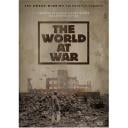 The second World War had a profound effect on the course of the 20th century, and unfortunately, its horrors, including ethnic cleansing, terrorism, despotism, invasions, the curtailment of civil rights, and rampant nationalism, are still concerns of the modern day. The documentary series The World at War is outstanding in its ability to unfold the complex issues of WWII in a clear, objective, and gripping manner.
Each of the 26 episodes of this five-DVD set, narrated by Laurence Olivier, focuses on a particular, specific aspect of the war, starting at the beginning with Hitler's rise to power in Germany and progressing through the end of the war. Because of this focus, each episode examines its subject in detail, going beyond the names-and-dates style of history that I remember being subjected to in high school, to delve into the much more interesting and important issues of how and why.
I learned something new from every single episode, starting with the very first one. The episodes proceed overall on a regular timeline from the beginning to the end of the war, but since a great deal often happened over a short period of time, the series backtracks at several points to fill in what was happening in different places. For instance, after we are taken through the events from Hitler's rise to power in Germany in the late 1930s to the Battle of Britain and Hitler's attacks on Russia.
Hands down the best WW2 documentary. They tried to cover as much of such a large scale conflict better than any other documentary
On this website, higher scores are given for films that are more related to current events, which is understandable, but this series deserves to be in the top three.
This series is exhaustive, and unless you are a history major, it is the quickest and most accessible way to understand the most destructive period in human history. Two things in particular stand out that make it a small miracle:
1. It is extremely time sensitive. They filmed during a crucial period where some of the most involved players in the war were aging close to death, but the war was so far over that some felt comfortable finally to come out and talk about their experiences. Most notably the long interview with Karl Wolff, supreme commander of SS in Italy, but many others as well.
2. The enthusiasm the BBC put into making it, dispatching all over the globe to uncover the story of the century and enlisting the best voice in the business, Laurence Olivier, to narrate the entire series.
The US government is too disorganized and partisan to pursue some of the policies you mention but I believe we are on a short road to ruin as a nation.
Quote of the week
"The world is a dangerous place to live; not because of the people who are evil, but because of the people who don't do anything about it."
- Albert Einstein
Does mankind learn anything from such history ?
Amazing series. I watched almost half the series non-stop. Huge brain dump and eye opening experience.
I was sound asleep, and my husband was watching the military channel. I heard the opening credits music come on, and immediately sat straight up in bed....It's been about 30+ years since I have heard that music!...my dad used to watch it when I was a kid all the time. Back then I had absolutely no interest in it, now I am dying to see all 26 episodes!
personaly i believe everyone should watch this it might make people think before giving the order to kill this has such an effect on me poor people sent to there deaths and for what?
One of the greatest documentaries of all time. A true gem.
I own this series and it is very, very good. I especially liked the interview with Stephen Ambrose (Author of Band of Brothers and many other books) where he provides his perspective and thoughts on the results of the WAR.
i really love that films am from egypt and i saw that filmes in 1985 whene i was just 10 years old its a mazing
Your screen on the world at war is black
Shame theres not all of it here. I only got upto winter in Stalingrad then it stopped. there is no more.
I agree with Patrick - should be required viewing.
Without question the best war documentary ever made, and one of the best documentaries in any category.
I first saw on tv as a kid, but later encountered it when history course I took at university used this as the primary textbook.
Made when many of the main players were still alive, so through interviews and archival footage we get a more complete and complex understanding of the war than the narrative usually presented, and never loses sight of the terrible cost of the war in terms of human suffering.
I remember this series when it was first "on the tele". My father was the first with a remote, "Hey, get out here and turn up the volume." I have seen many WW2 documentaries, and many more books, and this is the most complete history in one place, period. I think every one should see this series as a requirement, to teach just how fragile democracy is and the sacrafices those of that time paid to perserve it.