When The Levees Broke


 Spike Lee's When the Levees Broke is a television milestone that ranks with Edward R. Murrow's Harvest of Shame as an unflinching document of a national disgrace. Over the course of four hour-long acts (plus, for this DVD, a newly filmed fifth act), Lee chronicles the devastation wrought not just by 2005's Hurricane Katrina but also by ill-prepared, inefficient, and seemingly indifferent federal, state, and local officials, who fiddled while New Orleans drowned.
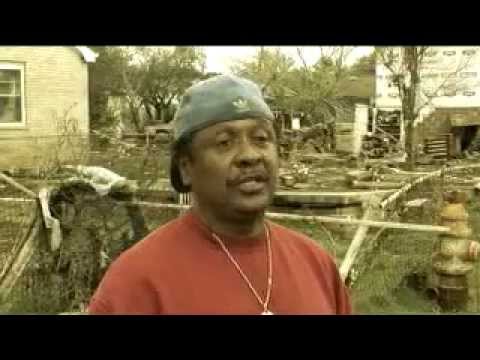
As Lee rightly surmised, when trying to wrap one's mind around the enormity of the Katrina disaster and its aftermath, sound bites on the evening news and partisan sniping on talk shows just wouldn't hold water. He meticulously compiled news footage and conducted interviews with residents, politicians, and volunteers; the raw footage of citizens railing at the heavens for someone, anyone, to hear them and help them is especially affecting.
There is plenty of blame to go around, according to Lee: There's FEMA director Michael Brown on CNN, professing ignorance that thousands were living like refugees inside the Superdome. There's Condoleezza Rice shoe-shopping and taking in Spam-a-Lot on Broadway while 80 percent of New Orleans was under water.
And there's President Bush praising Brown with You're doing a heck of a job, an infamous quote Lee can't resist playing back three times for its outrage value. Lee's voice can be heard off camera during interviews, but he does not inject himself into the proceedings.



Puerto Rico will be another national disgrace. It doesn’t take more than a sixth grade education to understand what is the issue. Why these two separate but equal disasters were treated in such a different and callous way than any other disaster in any other city is not difficult to comprehend.
There are people in PR that STILL don’t have power. I can’t vouch for Texans, but here in Florida we were all good within a week. Imagine that, imagine living in your hurricane ravaged homes with no power for 9 MONTHS, while your government does nothing....
It's a racist issue.. look at the regentrification.... How the people were treated at the time and thereafter compared with other "natural"disasters in non- minority majority cities.
I do not believe this is a Republican vs. Democrat issue, i think this is a human issue, in the wake of a natural disaster everyone deserves help, rich or poor. This documentary made me feel we need to do better as a society to give help where it is needed.
Not gonna watch this, too many tears.
John Urslan your an *****!! The republican party freed African Americans...****** like you are the problem,who insist on talking without knowing anything about your subject matter...bush was not a bad president because he was a republican..he was a bad president because he made stupid decisions and taught us exactly what not to do in a crisis..
You won't approve my comment, loser, because you're a coward.
One word: propaganda. F*ck you Spike Lee. Using a tragedy like this for political purposes. There was no f******* Bush/Conservative conspiracy not to help these people. It's your st*pid conspiracy theories and it's your st*pid bias that is the real problem. Every tragedy involving black people is a conspiracy by the Republicans. You're an i****.
I am hurt, full of shame and disapointed in our government. I know its a bit late but I am still saddened everytime i watch this DVD. I thank my professor for introducing my class to this eye opening disaster because i can now say that i understand even more about what took place. Thanks to Mr. Lee as well.