History of World War II: Hiroshima


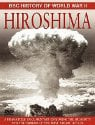 It was the defining moment of the 20th Century - the scientific, technological, military, and political gamble of the first atomic attack. This drama-documentary attempts to do what no other film has done before - to show what it is like to live through a nuclear explosion.
Set in the three weeks from the test explosion in New Mexico to the dropping of the bomb, the action takes viewers into the room where the crucial political decisions are made; on board the Enola Gay; inside the bomb as it explodes; and on the streets of Hiroshima.
For six months, the United States had made use of intense strategic fire-bombing of 67 Japanese cities. Together with the United Kingdom, and the Republic of China the United States called for a surrender of Japan in the Potsdam Declaration.
The Japanese government ignored this ultimatum. By executive order of President Harry S. Truman, the U.S. dropped the nuclear weapon Little Boy on the city of Hiroshima on Monday, August 6, 1945, followed by the detonation of Fat Man over Nagasaki on August 9.
These two events are the only active deployments of nuclear weapons in war. The target of Hiroshima was a city of considerable military importance, containing Japan’s Second Army Headquarters, as well as being a communications center and storage depot.

I've read the comments on here and I'm surprised no-one has mentioned the fact that Japan had tried to negotiate surrender three months before the use of the bombs. All they asked for was that Hirohito was not touched, America said no then promptly gave them what they wanted after Japan surrendered. The use of the bombs have been labelled as the first action of the Cold War according to several academics. Its prime purpose was to get Stalin and Communism to back off, using Japan to show off their new toys. There was no need to use Little Boy and Fat Man. For those interested read Atomic Democracy by Gar Alperowitz.
neocat 68 civilians were killed at pearl harbor and it pisses you off I guess them were army bases they atacted when they were going from city to city in china you have not done any looking into how they acted in wartime their soldiers raping china women two of their generals challenging each other to see which one could decapitate 100 people the fastest with swords and so on and so on and they trained their children to kill Americans so when we invaded Japan and the Japs and nazi brought 60 million people to their deaths on both sides and your going to be pissed off at americans who did not start this war and did not start fighting until the last 2 years of the war oh thats right it only lasted 6 years because we did drop them bombs it could have lasted 10.15 or 20 years, in other words, dont srart none and there wont be none
If the atomic bomb was not created, the technology we have right now would not be this technical because during the time of the creating of the atomic bomb, many scientist discovered unexplainable reactions that lead to the technology we have now.
This is a historically inaccurate eurocunt documentary.
I saw this on Netflix. It's complete crap documentary. It's full of anti-american language. It also had false information.. there was never an estimate of 80,000 killed. This is completely false. It's very one-sided in it's view. It doesn't look to answer any serious questions as to why the Americans dropped the bomb in the first place. The reason it was dropped was to end the war with Japan. And that's exactly what it did.
The final blow to the Empire of Japan's chances of survival was the pivotal Battle of Leyte Gulf and the US invasion and retaking of the Japanese occupied Philippines in the final months of 1944. From there, the Empire was cut in two -- the oil, rubber, strategic metals, and other vital natural resources needed for the continuation of the war were essentially trapped in Japanese occupied Dutch West Indies, Malasia, French Indo-China while Japan's Merchant Marine was decimated by US Navy submarines. Japan could have, and should have ceased hostilities and surrendered -- then and there.
Meanwhile, as Japan's industrial furnaces cooled, war production shifted to a more manually intensive manufacturing infrastructure in homes, businesses, and other disbursed locations. It was never intended by the Japanese to simply surrender and enter into a new age of peace, after butchering 25 million victims throughout Asia and the Pacific Rim. It was the intention of the Japanese to fight an invasion and occupation of the Home Islands. In the latter scenerio, US losses would have been in the high hundreds of thousands, perhaps a million, while Japanese deaths would have been off the scale and beyond imagination. The use of the two atomic bombs certainly avoided the total and complete destruction of a people, their culture and their nation.
I highly advise viewing the documentary Fog of War, which contains an incredible interview with Robert McNamara about the war between America and Japan, like has been stated above Japan itself was devastated by American bombing runs which had even begun using firebombs vs strategic targets knowing full well that the infrastructure of Japan was mostly wooden (whole cities burned down as a result), these caused far more actual casualties and property/environment damage than the nukes.
More interesting notes that I learned watching Fog of War;
One of the main factors that kept Japan from surrendering was the fact that the forces outside of Japan were being lied to or simply not told about the scale of the devastation of their homeland. The direct and horrific nature of the atomic bomb certainly drew attention to facts that were being withheld from the Japanese people and forces.
Many decisions over what were considered war crimes under the Geneva Convention were made directly under the ideal of "what the Germans did, that the Allies did not", to save many allied generals from the threat of being labeled war criminals after their actions in WWII. Certain horrific acts were considered justified as long as the Allies had also employed such tactics.
I couldn't even get 5 minutes into this documentary. It's sad this is taught as fact, such a shame after so many years.
It's well documented Japan wanted to surrender well before the A-Bomb was ever dropped. Not to mention the other WELL DOCUMENTED FACT that America not only forced Japan into the war, but allowed them to commit a major act of destruction to justify the war to their people.
It makes me sick to live in this world. Money and death, all people care about.
(Forgive my spelling mistakes if there are
any). Whoever is responsible for this act should be taken to court and charged
and even possibly executed for something as bad as this, we must set the
example that we take the rules of wore seriously even if the Geneva
conventions didn't exist then. The Geneva conventions where not signed at the
time when the Nazis committed there wore crimes yet we were still able to
charge them, so that means that the USA also are not excused for what they did
because it was a time before the Geneva conventions where signed.
We charged Hitler's men for wore crimes
because they lost the wore but people who commit wore crimes even on the winning
side should also be charged, a wore crime is still a wore crime. Japan should
be charged for the wore crimes they committed as well, among other countries.
We must set the example that we take wore crimes seriously if committed by either
side.
Don't get me started on Vietnam and Iraqi.
This was after the Geneva conventions where signed but nowone where charged for
the deliberate slaughter of civilians that happened there. What about Guantanamo
bay and the list goes on. Do we even enforce the Geneva conventions, if we
don't then what was the point in making them.
All the commercials kill the doc.
Ms. Kinoku, now THAT, is a strong woman
.....america did this...and they did not have to. there was more than one solution, this was just the most suitable to them, they could do less work, then by all means.
Commercials aside, (they suck) this was a good documentary, and well worth checking out for a look at the worst side of humanity. Note: the one flaw is the consensus that Japan had the chance to surrender at Potsdam, but didn't. (wrong) Scientists themselves agreed that the A-bomb should have been dropped off the Japanese coast to demonstrate what they really had in their possession, and were flat out ignored. (you don't spend 2 billion dollars for a demonstration) Furthermore, if the positions were reversed, would the U.S have just rolled over from Japanese threats of imminent destruction?
Needless to say, there was a reason that the 2 remaining A-bombs were on route 2 hours after the successful Trinity test, (Pearl Harbor) and the justification of nuking cities to save lives is mere rhetoric for the love of war. These comments are not a support of Japanese behaviour, (especially in China) only recognition that killing innocents (as long as they are not yours) is acceptable, even when they have no chance to defend themselves. (Japan no longer had air support) As Bill Maher so eloquently put it, (I am paraphrasing) it is an act of cowardice to drop bombs from 60,000 feet; it takes balls to fly a jet into something knowing it will kill you)
Besides, I have no doubt that the U.S, Russia, China, England, France, Germany, etc, etc love to sell their 2nd generation military hardware to brown people, so they can build them up as a future threat for the fifth generation onslaught they wish to test in the near future. For further insight, check out 'War is a racket' - Smedley Darlington Butler)
Doesn´t matter how you put it, these two bombs are the biggest atrocity ever commited by human kind, period
Your advertising is RIDICULOUS! I just love how it cuts in at a vital point and then screws up the video. Awesome...
I think we should realize that bombing a city would never end the war ……………………it would just move the energy from one point to another .
Many people seem to seek justification of the usage of nuclear weapons in Japan, racking it up to a necessary evil to quell a nation bent on war. This will be a question debated for generations past the one that actually fought. We must however accept the terrible truth that we caused innocent people to suffer horror upon horror upon pain regardless of the rationale. The real people that should have suffered were the generals and militarists that sought out war and fought it for the delusions of glory and honor. However the Japanese people have learned the hardest lesson that the rest of mankind should take notice of; war itself is the enemy, and it is a fruitless endeavor. This will be the lesson that we must learn if we are to survive as a species on a small planet in the vastness of the universe.
The Invasion of Japan was well known from other invasions and who they were fighting for the american government to expect just how many deaths there would be, from both sides. In fact the Army, as trinity was unkown and top secret from the rest of the world at this point, had millions of purple hearts made in preparation for the coming slaughter. This is why a new purple heart hasn't been made since because America has them on stockpile from this possible invasion. The Bomb had calculated risks and if we hadn't used them then, we would have used them at a later date, maybe in the korean war, vietnam war, or any other war we'v been in. having understood the possibilities of the bomb after hiroshima and nagasaki we now know they aren't the types of bombs you simply lob at an enemy.
Every USA president since the 1940's wanted war the big banks fund the enemy so they can keep the countries at war and make money from both sides. The Federal Reserve Bank is privately owned by big banks not the Feds.
Wake up USA you are being used.
Wow, there's a lot of controversy regarding the use of the Atomic bomb. I suppose that is to be expected though. Honestly, it's impossible to say what would have done more damage. There is no right or wrong here, it just happened, and may or may not have been right. I really wish people wouldn't declare war on one another, but what happens during the war happens I suppose. There's no use bitching about what's happened, and won't bring anyone back..
Japan was on the verge of defeat anyways. Japan knew, and the world knew. Dropping a bomb that wiped out an entire populated city in a 4km radius, killing hundreds of civilians and left thousands with psychological/physical sufferings is not necessary.
The Mitsubishi Arms Plant was a legitimate military target, AND the USA dropped thousands of flyers written in Japanese, warning the people to flee because this city was targeted to be bombed. This bomb ENDED the war and saved thousands, if not millions of lives -- Japanese as well as Allied. It was the RIGHT decision.
Thanks to the dickhead who complained until this video was removed/
Of all places why Japan? It's such a beautiful country. What would our world be like without them?? No new technologies, no new cars, no anime?!? Nooooooo, the horror!!
<333 Japan
Video is blocked - Copyright claim
Video is blocked - Copyright claim
Obviously there are alot of Americans trying to argue that they had no choice, and I agree the Japanese would fight to the death because they are/were a people of great honour. However, there is nothing you can say that can legitimize A bombing not 1 but 2 cities full of civilians, nothing. Its not like they couldn't have chosen a different target, say one without hundreds of thousands of people, to make their point. There is loads of evidence that they did this as a test but on a real city with real people. They immediatly sent scientists for evidence and tests etc. The Japs did some terrible things, as have most, but I wonder if they would have done what the Americans did given the choice. I don't think they would.
I think they say they dropped the bombs for certain reasons BUT I really think that if they had bombed a much less populated area the messaged still would have come across very clearly. They really chose these 2 cities for real life tests on 2 very different cities in terms of structures and landscape etc. Americans chose to destroy not 1 but 2 cities full of innocent civilians strictly for cold scientific purpose with the excuse of ending the war. Had the Americans lost, they're country would likely have faced the same stigma as the germans for needlessly slaughtering half a million -mostly innocent civilian-people. It really just proves that those who win wars write the history books because there is no way anyone can convince me they had no choice but to do what they did. Mass murder is what it is and the fact that this is propagated like it was a good thing to end the war is disgusting and shows how naive people are to actually believe the official line of BS. Never in the history of the world have that many INNOCENT CIVILIANS been annihilated by an intentional act by a country in such a short period of time. One for the record books but somehow I doubt that it is mentioned in one. Just imagine the black eye any other country would have had they done this.
This must have been such a hard decision to make. Hundreds of thousands of civilians were killed, but if the Allied Forces had invaded Japan, there could possibly have been millions of civilians killed, and don't forget the Armed Forces. I wish it didn't happen, but it was the lesser of two evils you could say. The Japanese would not surrender, they fought to the death, which had been recorded so many times throughout all of the Pacific battles. Also for what its worth, I have heard many Japanese say that they don't hate Americans for what happened - it was war and it took something this drastic to stop it.
So .... Was this worth watching or not? Comments should be reserved to whether or not the video was interesting, or bad, or worth my time. Your opinions and such should be left to a forum ... Just rate the stupid movie and stfu.
I am thankful that you do or do not feel. People died on both sides. Nationality is not an identity. Neither act shows a love for those we bear genetic similarities with. Pearl harbor? Nagasaki? These are people who are dead to represent the futures we may hold. I cried. A "Jap" life versus an American one... what weight measurement are we using? Lives saved? Yes this war could have cost more... or was it just enough?
-sad human.
It seems easy for many of us to pass judgments when we sit on our "thrones" and criticize. WE didn't struggle, WE didn't go through this hell, WE don't understand completely....and yet time after time I notice the "intelligent" or the "better informed" among us once again passing judgment. There is a comment here thought that I do appreciate....the focus that we should have is taking what we already know and preparing ourselves so that a tragedy like this (WWII, Hiroshima, Stalin, etc.) will NEVER happen again!
This was much harder to watch than I expected it to be, and I didn't expect it to be easy. For those who haven't seen it yet, I recommend to anyone of you who have kids, or who genuinely care about them (in fact, probably nearly everyone, I guess...), to just take my word for it and skip from minute 56 to minute 59, unless you're capable of completely checking your empathy at the door. Don't bother letting this maybe arouse your interest... Just do it.
Simply put, this was genocide of the worst kind. Too bad that people, who ordered this, won't be put to justice...
Originally intended for use against Nazi Germany? What a load of crap! Half of the technology they got from defected Nazi's and captured war criminals. Germany actually had the technology before the allies but didn't have a sufficient enough supply of hard water to implement it. I love how these kind of documentaries NEVER give enemies any credit for anything. As if the winning side thought it all up themselves, Hahahahaha!
Absolutely riveting!
I don’t know why many comments reflect an intention to justify war, death and destruction. From any human perspective, it’s impossible to validate war. “Saving people” killing other people is the most stupid justification there is. A philosopher from my country wrote: “when you want peace, you don’t prepare for war”. War is an anachronism, is uncivilized and inhuman from any point of view. If we are the only living being with highly developed communication, why the biggest part of our resources is destined to the industry of killing people? You may put the most beautiful patriotic music in the background, still, war is infantile and reflect underdeveloped societies.
i pray this will not happen again any where in the world
hi
Well done documentary on the two atomic bombs dropped on Japan to end World War II. These two nuclear bombs what ever people might say did end World War II and saved a million lives or more had America been forced to invade Japan. The Japanese would not surrender and would have prefered to die fighting. So the two nuclear warheads were seen as the only alternative.
Married to a Japanese woman for several years the anger of World War II is still very strong in the elder Japanese who endured the American Prison Camps of this time. Prejuidice is still very strong against any white person whether or not they are American, which I found to be interesting since I was from Canada.
That Hiroshima has once again grown into a city of 1 million people in only 66 years time shows the resilence and toughness of the human race. A city that was once destroyed by an atomic weapon is now thriving and successful again.
A well done documentary that shows the horrors of war and what people will do to end wars. May the two atomic weapons dropped on Japan be the only two such weapons dropped on a human civilization now that the horror of their destruction is known.
Wow. Americans; not only a nation of retards but also of pure
evils. Hopefully one day a few nukes will strike back.
Nuking them was the right thing to do. It prob ended up saving more lives by far would of there been an invasion of Japan.
If we invaded Japan, millions of Japanese would of died, not to mention our own troops. Hell, I would of Nuked 3 more cities if it ment saving more American lives..
what beggars belief is to imagine all the fair skinned Jesus believers in the US dressed the same and fascinated by shrink wrap and corvettes in their cookie cutter subdivisions praying on the prosperity doctrines .... by the millions....probably 2 weeks after all this happened. Remember that they all believe what the radio says. Now somehow picture that all of them somehow put on their war pants for a number of years and suddenly switched to happy shorts and skirts in the conversion of farmland into houses. Now imagine that somehow still today, they cannot connect the dots and simply accept that 6 million people were roasted by another crazy jesus inspired guy and that their government dropped a nuclear egg over a city just for a fun and profitable revenge and that it is incredibly sad and unfair.
Just saying that it is phony victories like this one, the lack of truth and the feeling that something terribly injust just happened that gets people to hate entire cultures and nations.... and shows that the christian god is not very good with prevention of big issues...
sorry, this is a sore subject...i can't put myself through this doc.
Absolutely horrific to think how far we have come in development of weaponry since then. If something nuclear were to happen now, I am sure there would be no survivors to make such documentaries on the devestation that a bomb would cause now.
An interessting doc, and one that provoked a lot of disturbing thoughts.
The first one being that these bombs were just medium firecrackers compared to those developed in the years following the annhilation of the two cities. After all the fission bombs used in WW 2 are merely the detonators for the fusion bombs developed in the early fiftys. The first H Bomb tested in 1952 already multiplied the yield of the Hiroshima bomb by a factor of 800.
That's already something to chew on but what really bothers me is that while the attacks were clearly a heinous war crime, there is a strong case to be made that without the bomb and without this ruthless demonstration of its power, the world probably wouldn't have taken long to descend into WW 3. Obviously the attacks were only the peak of the iceberg of the western allies' war crimes during the 1940s but ironically the only ones that are actually brought to the table as such. The deliberate and systematic mass murder of hundreds of thousands of civilians - for political, not tactical reasons - had been the rule not the exception during the conventional firebombings that had taken place. But as usually history is written by the victors and while most people know about the atrocities that the Japanese and the Nazis commited, there is already much less talk about the Sowjets contribution to the insanity of this conflict. And of course the only actions by the western allies that one can even dare to question openly are the attacks on Hiroshima and Nagasaki.
Having said that, from my pov, the attacks were clearly morally wrong. The excuse that the bomb shortened the war is completely missing the point. It shortened the war significantly because the Japanese saw that there was no way left to win or at least to achieve a draw. But that's no reason to destroy an entire city, the effect on the Japanese high command would have been similar if the weapon had been used in a military context or simply put down in the bay of Hiroshima. Yet at the same time there is good chance that these events prevented the Sowjets to overrun its former Allies and drive them into the Atlantic, an eventuality that became a great concern to the western allies during the following months. Certainly during the later developments, namely the emergence of the Cold War, the bomb harshly dampened any attempt by either of the two blocks to engage in military operations against each other, effectively preventing WW 3.
The paradoxon here is a derivative of the original paradoxon of the bomb. As soon as two partys have the capability to use it against each other, conventional military conflict becomes pointless. The less balanced the conventional conflict becomes the more incentive is given to the loosing side to go nuclear. And even if one side is a day away from defeat, it can still make sure that ultimately everybody is defeated, no need for a winning side. This way you should be more afraid of your own side's military succes than of the enemy's.
So the bomb itself is a curse and a blessing at the same time. And of course its power would have been demonstrated at one point or another, just as every other weapon in the history of mankind before it, it was prone to be used eventually. And as zynical as it may sound, we are lucky it happened then when nobody could retaliate in a similar manner.
Time has changed, the blocks don't exist any more, large scale conventional conflict seize to be a major concern. At the same time nuclear technology like all other technology has proliferated and become much easier to obtain. As Duerenmatt put it, the trouble is that mankind cannot unlearn what it has learned, man can create knowledge but he cannot destroy it. Chances are that at some point these weapons will be used again unless we find something even more destructive and monstrous to use against each other and that's not really comforting either.
Even now Tibbits is deluting himself.
As then, as now; this time through covert means via electromagnetic frequency weapons and most likely, hydroexplosives. FDR was a Jew as were the other players as are the players now.
Most annoying statement from this video:
"The final decision that resulted in the two bombs, Hiroshima and Nagasaki, was not made in Podstam, it wasn't made by Truman, it was made by the Japanese militarists when they rejected any opportunity to surrender just their armed forces and save further massive loss of life."
Anyone who knows anything about international relations knows that that is bullshit. That "opportunity" was given as show. There was no explicit warning of "we are going to drop nuclear weapons on you, kill hundreds of thousands, and destroy entire cities, as well as leave lasting radiation effects that will go on killing for decades to come."
Sorry but American militarists knew damn well that that "opportunity" would not be accepted - what reason did Japan have to surrender at that point!? None.
Hiroshima was a plan set in motion for reasons other than "ending the war." But if that is how those involved choose to look at it, so that they can sleep at night, than so be it. Ignorance is bliss and what's done is done, buttrying to say that by not accepting surrender the Japanese accepted nuclear annihilation is disgusting, and outrageous
I guess the Japanese figured that they could attack the United States, murder 2.5 million Chinese, Koreans, and South East Asians (that they considered to be sub human by the way). Test a variety of biological weapons on untold thousands of Korean and Chinese civilians, chop the heads off of prisoners of war for sport, and near the end of the war roast thousands of Allied prisoners alive when they got too weak to do any more slave labor and get away with it. They figured wrong.
The biggest tragedy of WW2 wasn't Hiroshima or Nagasaki. Hell the Japanese butchered +200,000 people during the Nanjing Massacre and let their troops systematically rape +50,000 Chinese women and young girls. In may ways the Japanese made the Nazis look civilized.
The real tragedy was that while the war crimes trials in Germany were extensive the war crimes trials in Japan were a small time joke by comparison. And to not hang Hirohito by his skinny neck and let him do a rope dance along with every senior member of his government was a travesty of justice. Some say that Hirohito was a figurehead and a sensitive kind man that had a disdain for war..bullshit. He could have ended the war with a single word at any time. And it seems clear that his disdain for violence began when the war turned against Japan, about the time that General Le May's B-29's started flattening Japanese cities one after another.
Yeah, its a shame civilians have to pay for the actions of their government but that's just the way it is for the Human Race...the Killer Species.
@ Robert Millete
Maybe you should re-read my post, I clearly stated that dropping the bomb was wrong. My point was that it doesn't justify wishing harm on American citizens, not that it was excused by the atrocities Japan committed. In fact the whole point of my post was that killing is wrong period, no justification period. Did the U.S. drop the bomb out of a genuine interest in ending the war and saving lives, I don't know. Perhaps they did simply want to show everyone what they had or find out for themselves, but that's beside the point. Like I said every country has done similar things, Japan included. So what- we are going to start weighing it all up in order to justify mistreating more people? If you genuinely have an interest in seeing the least amount of suffering and death in this world that is the wrong mind set to start with. It seems to me you guys are still caught up in whose to blame, who do we punish, GROW UP ALREADY!!
The Japanese nor the American government will ever officially admit to the things they have done, and it would not accomplish anything if they did. What will accomplish something is for the people of this world to realize these divisions and distinctions are superficial. We are all one people, the human race. As such we are capable of great tragedies and horrible cruelty but, we are also capable of the most wonderful creativity and compassion. It is up to us which dominates this globe. If we insist on revenge and holding whole races of people responsible for the actions of their fathers and grandfathers, well you see where that has got us. We can't look at it like 10,000 Japanese died at the hands of x amount of Americans. We must see it as 10,000 humans dieing at the hands of fellow humans, we are killing our own. If we exact revenge for that we will only kill more of our own.