
Who Killed The Electric Car?


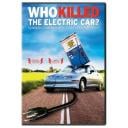 The big oil companies and their political allies may hate the very idea of the electric car, but writer-director Chris Paine remains an unabashed fan of the technology. His informative and entertaining documentary, which makes an explicit link between carbon dioxide emissions and global warming, traces the evolution and eventual marketplace failure of the innovative vehicle.
Laying the blame at the feet of General Motors (which eventually reclaimed the first models leased to consumers and crushed and buried them in the Nevada desert), apathetic politicians, and an unrepentant oil industry, Paine also gives voice to the car’s staunch defenders, Mel Gibson among them. He may have a clearly defined axe to grind but, in this war-ravaged and environmentally distressed day and age, Paine’s passion is worth attending to.
Filmmaker Chris Payne explores the many factors that played into the ultimate failure of the electric car to catch on with consumers, even as gas prices began to skyrocket, in a thoughtful meditation on the increasingly important role that renewable energy plays in modern society. Introduced as a means of providing an alternative to increasing oil consumption and reducing pollution in 1996, the electric car was all but a forgotten memory only a decade later - but why?




Randy, you're.... On second thought, I'll refrain.
Why can't I watch this on TDF like I used to? Did TDF get threatened with something by someone? Is it part of an attempt to hush hush this story?
This movie fails to mention that GM sold the patent for the EV1 battery to another company. Under the agreement, nobody can use the battery without permission from that company. Failure to comply will result in a lawsuit. The only way GM could be certain that nobody was using the battery was to destroy all EV1s.
The company that bought the patent for the battery - Exon Mobil
Who Killed The Electric Car? - petroleum companies, greed, corrupted politcs and govements, the list is long
May be the above is correct. Yet, nothing could stop the progress. When a technology that works becomes a reality , electric cars would replace gasoline vehicles in a matter of five years or so.
Or, when the electric car technology becomes more profitable than gasoline vehicles, new would replace old in a matter of five years or so.
While you jest, the oil companies' "plot" is very transparent. And Atlantis is basically where they live. Henry Ford originally developed a water based engine. Estimates are that if that technology had been released instead of the petrol based engine (since fuel efficiency with a water based engine does not benefit anyone's bottom line) mileage would be close to 100 to over 3,000 mpg of water OR GREATER. Much of that would have been synthesizing electric with a water engine! With an electric car, you still need to plug it in so some oil, coal, natural gas, etc is being burned somewhere to gain that charge.
So the next generation is a water based engine. You can actually find the technology rediscovered on YouTube. Look up "water based engine" and "water powered car."
Ha ha ha ha this is the evil oil companies and it seems that you have discovered our evil plot to destroy the world while we rich people go and live in Atlantis and our flying castles in the Sky (thats my summer home)
Going to drive the new Nissan Leaf tomorrow! I'm excited!
It only gets 100 miles per charge and takes 8 hrs to charge (hmmm) ... but I guess it's a start.
Electric Car it the future!
No matter what hurdles or failures happen all of us will drive purely Electric Cars or hybrids in 30 years or so
It seems with the 300+ mile enhanced battery and a solar power recharging station, you could have the perfect vehicle.
Those batteries looked extremely thin and efficient. You could easily put 8 of them together instead of a traditional engine and you'd have space left over. Then you could go across the country without ever recharging.
The ultimate solution is for our money to be based on Earth's Resources (kind of like a Gold Standard ... but with ALL resources) instead of based upon debt/interest repayment, we would not have this Oil Economy. Our current system turns money into a commodity instead of simply a medium for exchange.
Who killed the Electric Car? The Federal Reserve. They are the silent killer of ALL humanitarian technologies.
Very good film thought it is long time since a saw this film.
Looking forward seeing the second one called Revenge of the Electric Car.
THIS IS SAD!!!
Where can i see the publish date of each documentary ?
I found this very good information. I am only 15 right now so I wasn't really aware of all this while it was happening, but so where many adults as the video said. I find this just another example of corporate greed in the world. Also the video may of said it but I forget. Why did GM take the cars away? Just say why and I'll get an email saying ur answer.
Holding back progress for a buck, no surprise there. Jobs are a thing of the past. What people have to realize is technology is going forward no matter what. Ever heard of the contradiction of capitalism or technological unemployment? The problem is we are clinging to old ideals that are no longer valid and the result is what you see today. Every system that is important to life is on a decline.
The air we breath, the water we drink, the food we eat has been all going to sh*t. We need to start taking an objective look at our old practices and coming up with new ideals that would be far more beneficial for the world instead of a select few.
The sad thing and also understandable is people can't see past their immediate needs. So why they try to do the best they can with what they have, they don't do anything about the thing that put them and will most likely put their kids in the same situation.
This is really outdated stuff, You could Bloombox the car or, Now they can send electricity threw the air, Who needs Battery’s?
GEO...POLITICS!!!!
If we eliminated oil dependency... I would LOVE to see how that changes the game in the Middle East.
Of course, the question would now be... lithium. And according to what I've read, Bolivia could be the 21st century's Saudia Arabia in that respect. Unfortunately, they are not too keen on US policy right now and furthermore, are quite friendly with Iran. Reportedly, even supplying them with uranium.
Did I mention China has a pretty decent supply of lithium, as well?
Oil or lithium... choose your poison, I guess. Seems like a catch-22.
@DD,
I am one of those who agree with you completely. Its not like electricity is an abundant natural resource. A very insignificant portion of electricity generated today is from renewable resources. So you still need to burn something to get electricity. I donno why that would be hard to figure out for oil company executives. They can still maintain the control on society. I couldn't think of any other motivations.
Electricity often comes from coal, an energy source that is both a regional air pollutant and a contributor to global warming...
Why, then, is the electric car depicted as some environmentally-friendly miracle? It is far from that.
Wrong, I am fairly wealthy and I struggled to build everything I have myself with no help from anyone... certainly not my loser parents...
Being prepared for the worst is how I protect my family and keep my fortune.
...hippies...
Hehe, yes, expecting the worst makes it so you won't ever be disappointed, doesn't it? Just like never setting out to do anything won't have you failing either.
Oh and btw, where is all this money coming from to re-educate these poor people?
The gubment is broke... no rich folks are gonna help anyone... (not in any real, practical way), and the poor auto mechanic can't afford no re-education, he's already steeped in credit card debt.
I guess it's a cardboard box in the street for that poor guy, so you can have an electric car.
Very nice.
Yes someday soon oil will run out... then we, as a species, need to go off to sleep...
As I said, there are better species on this planet than we domesticated primates...
We messed it up, now it is their turn...
@Randy People could be schooled anew to carry out different tasks, like, oh I dunno, maintaining the charging stations for these cars, perhaps. And working on better, cleaner forms of batteries. Though the oil industry is far more pollutant as lithium batteries have a far greater life span than a tank of gas so when you put it in perspective the pollution is much less 'horrific'.
Funny how, when technological advances knock on our doors, there's always people 'concerned' with people losing jobs. They don't really care about the jobs as usually the people who complain about these things don't even work in that industry. People just fear change and will think of any excuse to prevent it.
Some day the oil will run out and that day will come sooner than most people think. We're going to have to make the switch eventually. Might as well be sooner rather than later.
I have seen this doc and I must take "The Devil's Advocate's" position, because I love the Devil...
Just Kidding!
Anyways, as they state in the doc, electric cars are easy to maintain and have fewer moving parts, without the oil process...
How many car mechanics would they put out of business? How many children would go hungry because Daddy, who was only trained in auto-mechanics and was able to make 15 bucks an hour "pulling tranies" at a Jiffy Lube and using GM parts, would now have to work at a Wall-mart for 7.50 an hour?
The man has a skill, that is now useless, and his kids go hungry, and you all call that progress?
Maybe, GM was trying to keep those men and womaen employed so that they could feed their kids and, yes, make money for themselves, too? Making money is NOT a bad thing. It feeds you!
See, the hippies never think about that stuff... sometimes, a cleaner world means more starving people.
Actually, OFTEN, a cleaner world means more starving people...
Also, there are the lithium batteries which are more toxic than the waste of any nuclear power plant. That's mutagenic, horrific toxic waste! Where are you gonna put that, again? Also, your cell phones and lap-tops are monsterously toxic! Good job!
It don't matter to me. I got no kids and I am on my way out, and I do NOT care if the failed human species survives another year... there are better animals on this planet than we, that will survive and flourish after we are gone...
But, you claim compassion and yet advocate horror. Agony is the hippie legacy.
I am evil and I have nore comapssion than you... silly humans!
This is a very important documentary for people to see.
I hate GM for what they did. I will never bye a car from GM.
Stupide people with power, they just destroy the world and don’t care for anything else but money. Why do people like that decide the future. They should be in jail for cruching those cars. No GM, no problem, no corrupt goverment, a better world for everybody. Gas and oil for transport and big machines, electric cars for the everyday use of regular people. Why is that so hard?
This is an awesome movie! It shows how the U.S. was ignorant of hybrids and electrics back then. It's a good thing we're starting to ealize what gasoline is doing to the world's atmosphere.
I have one of the original S-10 electric made by GM. I drive it every day. Love it. Originally GM made about 800 electric EV1 cars and 500 S-10 EV trucks. Of these the 800 cars were leased out and 450 of the S-10 were leased out. They were able to take them back because the people never owned it. They leased it. The 50 S-10 trucks remaining were sold to different government institutions making it possible to get one of the original 50. There is app 35 running yet today. I have one of those. I look forward to when we all have one for our 2nd or 3rd car.
Theres something I didnt quite understand, why would all those people who bought those ev1 electric cars let GM to take them away?....they should have defended them with all they could.
I would have preffered to bury my ev1 underground for a while to avoid the take over.
I have one of the original S-10 1997 that GM built. I love it and drive it every chance I can. Of the orignal 500 of these 450 were crushed. I have one of the 50 that sold to Government agencies.
Cbostic31...did you not see the end of the documentary? They have an interchangable ev battery that can go 300+ miles. I drive a hyundai(cheap on gas..35 city mpg) and I get about 13 gallons to a tank. So on a full tank of gas I would be lucky to get 450 miles per tank. Now, my car is an acception. The average car get perhaps 25 mpg. If they had a small tank like mine, that would be 325 miles to the gallon. So ev cars are even more realistic now than they have ever been. We need to stop electing government officials that have stock in the oil company, or maybe even the electric company so we can have a non bias opinion when the white house is confronted with these petitions or bills and have them passed(or unfornunantly denied) based on facts alone. But that is a mere dream, I suppose.
This is really outdated stuff, You could Bloombox the car or, Now they can send electricity threw the air, Who needs Battery's?
Global Warming Haaa.. theres a reason electric cars arent used they suck. some day they will get it right and we might be able to go more the 150 miles on a full charge now that i would buy into.
I saw the original of this before it was bastardised to be used for the global warming swindle.
Shame really.
the video is working again... this doc. is FANTASTIC... really mind boggling how the car companies, government and the petroleum companies 'seemed' to band together to get rid of these amazing VERY environmental, economic and affordable (overall) vehicles...
thank goodness however, the electric car is making a comeback...tho' it's more of a hybrid now than a full-fledged electric (stupid gas companies)...
I highly recommend this documentary. A+++
Who Killed The Electric Car?
petroleum companies, greed, corrupted politcs and govements, the list is long.....
Hello Vlatko, just have to inform you that this video is "Currently not available", just as you know :)