Richard Feynman: The Pleasure of Finding Things Out


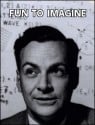
Richard Feynman was a scientific genius with - in his words - a "limited intelligence". This dichotomy is just one of the characteristics that made him a fascinating subject. The Pleasure of Finding Things Out exposes us to many more of these intriguing attributes by featuring an extensive conversation with the acclaimed Nobel Prize winner.
During the course of the interview, which was conducted in 1981, Feynman uses the undeniable power of the personal to convey otherwise challenging scientific theories. His colorful and lucid stories make abstract concepts tangible, and his warm presence is sure to inspire interest and awe from even the most reluctant student of science. His insights are profound, but his delivery is anything but dry and ostentatious.
Heralded as one of the greatest physicists of all time, his curiosity was nurtured by his military father, who encouraged him to explore and comprehend the world around him in a manner that transcended textbooks and grade school teachings. Armed with a restless thirst for knowledge, he felt constrained as a young boy by an educational system that favored memorization techniques over true learning. His observations of early boyhood experiences - when he questioned everything from the composition of a flower to the nature of inertia - clue us in on the birth and evolution of a great mind.
The film isn't all about childhood wonder and the innocence of discovery, however. After having established himself as an undeniable talent in the world of physics, his expertise was called upon to assist in the development of the atom bomb during World War II. His essential involvement in the Manhattan Project, and the catastrophic loss of life it eventually wrought, left him severely tormented. His self-doubt soon rectified itself in the form of historic research and theory development, influential teaching assignments, and from achieving the top prize in his field - the Nobel Prize in physics.
Filmed just seven short years prior to his untimely death, The Pleasure of Finding Things Out is a highly engrossing tribute to a towering intellect, and a valuable reminder of how the complex beauty and potential consequences of science impact us all.



I know science makes anybody attain a level of certainty.
Inspiring man . If only more people had the level of curiosity and a father ( parent/teacher) to prompt that interest
I see monit: The site does not exist.
"It's OK NOT to know"....
That makes me feel better about my limited knowledge of everything... fascinating man !
Afyer watching this video , I realised how interesting the learning is !
Brilliant documentary worth watching if only for how to be a better father.I was weak at physics but watched this out of fascination with great minds that have helped shaped the world and timed in which we live and have all benefited from the hard work of such exceptional minds in one way or another.Particularly touching for me was to see the joy with which he recalled how he would explain the hidden laws of physics to his son by making a story interesting to hear.This is a divine gift many can learn from if one is to enjoy parenthood more and have a greater impact on ones children and others.
Makes me want to learn mathmatics all over again.
Stunning guy.........wish that I could have met him.
"What's the matter with chemists?"
I think he avoided the religious questions for obvious reasons and didn't want to upset anyone. Think about the way he thinks... he hints at his view on it when he mentions the various different spiritual views.
That was great. His way of questioning whether something is true should the standard for all "facts".
Interesting doc. A brilliant mind no doubt. But besides all this praise I cannot get over the fact that he helped to create the atomic bomb. He was celebrating after it went off and hundreds of thousands were killed, and many more more lives for many generations destroyed. He calls himself irrisponsible for good reason. And at the end he clearly shy's away from the mystical and unexplainable side of life or life questions and sticks to science of the explainable, so clearly there will be part of the equasion missing at the end.
insight into a true genius' mind
I teach Maths and Physics to secondary and high school students. Anytime I teach a subject that might include Feynman's explanations, I make my students watch excerpts from his interviews. I haven't seen any student who wasn't impressed by him and who didn't renew their interest in science.
Especially his "lost lecture" is a must read.
I agree particularly with him when he said that he hated honors. What he calls honor I call vanity. People do things nowadays or have ever been doing things to show off, and not necessarily because they wanted to make some progress useful and important to the world. Seemed to be a really simple and humble man. Someone devoted to science and to life, without being focused on image, fame and other common things that we see in the world. In short, he teaches to look for knowledge in the depths of things and do it seriously, not just to be recognized by society.
Very inspiring documentary. Loved the way he shared the stories of his past.
Feynman is cool, so he surely was joking with his definition of classical magnetostatics: perfectly closed on itself current loops "sourced by batteries or generators". That is impossible and unphysical.
Ads are so annoying, what site is this hosted on so I know to never visit it? Documentary is awesome though
Im glad he has shown recognition for people were dying while they were playing drums and partying and that after the war turned his back on that kinda research. Great man could listen to him talk and talk very interesting guy.
Well, I started the video just out of curiosity, to see for the first time how Richard Feynman actually was and talked.. And I only realized I didn't stop when it finished. This surprisingly made me feel happy and peaceful. How nice to "discuss" science with a great mind and get away from everything for an hour!
Reminds me of Krishnamurti.
Just watched this again on a dreary Saturday afternoon for the umpteenth time.
Whenever anyone asks me if I "could have a conversation with anyone, living or dead", my go-to is to have Richard Feynman come back and explain the Universal Theory to my dumb ass.
So nice to have a filmmaker allow the subject, person, to just tell her/his story without interruption. I think Errol Morris does this, with a bit of intervention or intrusion, but mostly the same way. To allow the subject of the film to present the self as it is, with little interference, or none as this case is, is terrific. Certainly there is editing and there were questions asked, but the final narrative, the self exposure, is a kind of empathy, rather than some dictum. Tres bien. As it were. es
so has anyone finally solved his problem that he was working on at the time of this film?
He was a POET.Nobody thinks of Physicist as artist, only musicians or painters, but what else can be more creative than to elaborate a different view of reality or to discover an universal law that changes our technology?
If Noah and his Arch happened today, definitely i wopuld not want politicians , economist, doctors of surgery, even architechs, they don´t know the basics laws and formulas under which their instruments work, without the physicist we definitely would go back to caves, no Internet, no electricity, no Laser, No GPS, No Mobile, No cars, No plains, no NOTHING
We owe all our confort lifes to people like Feynmann, all others really are irrelevant.
No sportsman, no politician, no economist, no doctor helped to advance humanity at all, they just go to congresses to learn from physicist and creative investigators new tecniques to apply them without even knowing how it works.
You think an computer technitian knows how to really build from scratch a computer, applying all the quantum mecanics involved?
No way