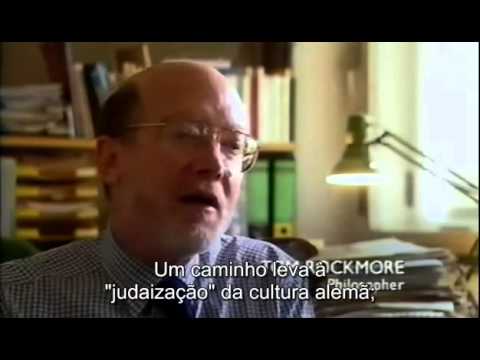
Heidegger: Thinking the Unthinkable


German philosopher Martin Heidegger addressed the central question of human existence full on, by examining how human self-awareness depends on concepts of time and death. His preoccupation with ontology - the form of metaphysical inquiry concerned with the study of existence itself - dominated his work. The central idea of his complex Sein und Zeit (Being and Time) (1927) could be summed up in the phrase 'being is'.
Man had to ask himself 'what is it to be?' and only by doing this, and standing back from absorption into objects and other distractions, could he actually exist. For Heidegger, the constant fear of death and the anxieties of life helped man to ask this central question – the mystery of life was intimately linked to the individual's confrontation and consideration of the temporary nature of their own existence.
Heidegger also felt that art, like language, was important evidence of existence, something which was a real existence rather than a mere recreation of reality. He opposed technology, which he believed caused alienation, and advocated a return to an agrarian economy in which the individual had a greater role. For many Heidegger’s reputation is tainted by his association with Nazism in 1930’s Germany; he actively supported Adolf Hitler during the dictator's first years in power and after World War II he was banned by the Allies from teaching and publishing for five years.
Despite this, his work has been widely influential, especially on the thought of twentieth century philosophical giants such as Sartre, Lacan and Derrida. (Excerpt from bbc.co.uk)




The intellectual vacuum created by atheism , is often used by idelogies of rude paganism,including some forms of nazism.It`s not strange so many atheist are the leftists,though the leftism is not so scientific,after the marxist utopia.
Fantastic site. There are several videos that are no longer available. Taking them off would be more honest, and save us all time. Thank you, Victoria
Shame on this man. And frankly, I'm surprised that his tombstone has not been defaced as have so many other stones of men like him.
If you will look at Pg. 3 of the introduction of "Being-in-the-World" paragraph 2
that starts: "Since Descartes...", you should find the answer to your
subject/object problem. Heidegger is doing ontology, not epistemology- which he thought was a "scandal" that it was even considered a problem. Treating Dasein as a "subject" does not refer to the subject/object problem, Dasein is the subject of Heidegger's work and Dreyfus's commentary, at least that is my understanding. Please let me know if I understood your comment correctly. Thank you.
is this doc about Heidegger or Nazis? can't they be dissociated?
Thanks for the history lesson about the Nazis and the restructuring of Europe. I thought I was watching a doc about Heidegger's philosophy, but hey, I won't complain.
While an informative documentary it is flawed in one big respect.
It pays too much attention to his Nazi connections where on the other hand
it should have done more to explain his philosophy.
This movie is more about Heidegger the Nazi quisling or collaborator rather
Heidegger the philosopher.
i thought i was at the philosophy section not the anti nazi one
You're quite right. Heidegger himself is supposed to have said that, if you've studied Aristotle for 10 years, then you're ready to study him (Heidegger). I always advise people to start with a commentary on Heidegger, such as Hubert Dreyfus' "Being-in-the-World," before going to Heidegger. Heidegger's German is no easier to understand than the English translations of his work. However, one really can't do serious philosophy nowadays and ignore Heidegger. Even the stalwarts of the one-dimensional "analytic philosophy" tradition are beginning to understand this.
This smooth documentary is an affront to standards of intelligent appraisal and good judgement. Its quiet voice-over, smooth editing and selected biographical details are dedicated to destroying Heidegger's reputation and demonizing the man. The film says little about Heidegger's philosophical perspective and repeats platitudes about German society's alleged injustices and persecutions during the 1930s.
Heidegger, a peasant at heart, successfully maneuvered a path through class-rigid German society. And for this, as much as for his philosophical insights, he will be remembered.
In its time, the Nazi Party offered similar opportunities to millions of other young people without work and dispossessed by the terms of the 1919 Versailles Treaty. Among other punishments for losing World War I, Germany was forced to pay 269 billion gold marks to international bankers - one of the most monstrous fines in all history. In 1933, Hitler refused further payments - the real reason for Britain starting World War 2 six years later. Germany's sovereign debt was finally paid on Sunday 3 October 2010 - a completion date unnoticed by most of the world's media.
If a just appraisal is to be made of Heidegger and his society, the biased perspective of ethnicity so painfully over-emphasized in this documentary must be abandoned. Economics and social psychology offer a broader and more salubrious platform.
When I first read Being and Time (1956 Macquarrie-Robinson ed.), I had a difficult time understanding their translations of key phrases. I finally came across a book by Hubert Dreyfus (Being-In-The-World, a Commentary on Being and Time, M.I.T Press,1991) and the light bulbs went off! Afterwards I came across a new translation of Being and Time by Joan Stambaugh (1996, State Univ. Of New York Press) and found it far superior to the 1956 ed. As far as I'm concerned, his philosophy has nothing to do with Nazi-ism. He took his dedication to Husserl out of Being and Time during the Nazi era, but put it back after WWII. Like Nietzsche he had a higher ideal of authentic human-being, but with our culture and fascination/reliance on technology and the "newest fad", we'll never be visited by extraterrestrials, because they haven't seen evidence of intelligent life here.
Could Heidegger not have been forced or coerced to campaign and support the Nazi party?
I guess, though, if he remained in the party so constantly, it is unlikely.
Does not outline some of Heidegger's most important contributions to philosophy. Just another historical assessment.
This documentary is based on the typical political correctness paradigm (anti-Semitism) which is currently so pervasive in our society today. Then it blames Heidegger for being a politically correct Nazi merely for being on the opposite side of the political spectrum. Pure hypocrisy. The subject matter is completely drowned in a sea of political clap trap. How disappointing. This program purports to be about philosophy.Alas it is not but pure rhetoric.Hopefully I can find some alternative and more informative source elsewhere.
Honestly, having read Heidegger, I do not understand why anyone would find him interesting. This documentary is alright, but he doesn't deserve any attention for his ideas. Most of them are just nonsense. Read Einstein instead.
I watched only about 3 minutes and then gave up. First Rorty, like a yapping lap dog, couldn't resist having a go at Heidegger, and then the PC commentator declared National Socialism as "the most sinister political movement of modern times". Really? Communism killed (the lowest estimate btw.) 40,000,000 people, while the Nazis (and note, you get thrown into prison if you so much as dare doubt this figure) killed '6,000,000' (why the legal enforcement of this historical ‘truth’? Name me one, just one, other historical fact that is legally enforced).
Of course, T. S. Elliot, Yates, Ezra Pound, Céline and others were also all great thinkers - pity they all got it wrong in thier politics! Or did they?
I don't see how a documentary can focus on a philosopher and ignore what he is known for. Nazis have been the rage for some time. I don't see that interest dying out. That is a part of this philosopher and nothing is going to deter from that unless the serious student reads him for him or herself. Film can only do so much anyhow and they do have to pay the bills.
Interesting but if you want to really delve into what his philosophy is about, it is only touched on a little bit and it focuses entirely on his support of the Nazi regime.
Dude, his books are still in print and he is on the Internet. Maybe it is not hearing it but reading is how he intended his work to be communicated.
I want to hear more about his philosophy and not more about the evil Nazis.
I sorry but I would have to add, JPT, that I find it very perplexing why the philosopher wasn't jailed and/or arrested either. OLU's question is a valid one. He did more than express an opinion. The people he went after ended up in labor and concentration camps. Many of them ended up dead. He was a lot more than just a member of the Nazi Party. He was an active participant.
@Olu (why wasn't he jailed?) Maybe because in a democracy, ideally one shouldn't be jailed for their political beliefs. If you were alive as a citizen in Nazi Germany, you (assuming you were German) would probably have been a member of the party too. Human beings are like that, you have to consider the historical context.
I don't think this forum is the correct place to debate Heidegger since most of us only saw the BBC film. It certainly is not enough to make an informed judgment.
I have to say that the BBC does a fairly decent job on most subjects, but I want to read the man himself.
Call me simple minded. However, I believe that there are degrees to human's frailties, and Heidegger wins the great lot! Though revered for his work, I find it hard to see how one could disassociate a man's evilness from the work of his hands no matter how glorious that work might have seem otherwise.
To me what actually happens was that this man had a moment of consciousness and ran with it. However, that consciousness does not define him. He sought power and fame and position with highly ranked wingnuts, but came up empty. If he were indeed a very thoughtful man, he would not have wandered in the path he chose to travel. As such to me Heidegger is nothing but a fake!
My concern is, why wasn't he jailed after the war?