
America before Columbus


History books traditionally depict the pre-Columbus Americas as a pristine wilderness where small native villages lived in harmony with nature. But scientific evidence tells a very different story: When Columbus stepped ashore in 1492, millions of people were already living there. America wasn't exactly a New World, but a very old one whose inhabitants had built a vast infrastructure of cities, orchards, canals and causeways.
The English brought honeybees to the Americas for honey, but the bees pollinated orchards along the East Coast. Thanks to the feral honeybees, many of the plants the Europeans brought, like apples and peaches, proliferated. Some 12,000 years ago, North American mammoths, ancient horses, and other large mammals vanished. The first horses in America since the Pleistocene era arrived with Columbus in 1493.
Settlers in the Americas told of rivers that had more fish than water. The South American potato helped spark a population explosion in Europe. In 1491, the Americas had few domesticated animals, and used the llama as their beast of burden.
In 1491, more people lived in the Americas than in Europe. The first conquistadors were sailors and adventurers. In 1492, the Americas were not a pristine wilderness but a crowded and managed landscape. The now barren Chaco Canyon was once covered with vegetation. Along with crops like wheat, weeds like dandelion were brought to America by Europeans.
It’s believed that the domestication of the turkey began in pre-Columbian Mexico, and did not exist in Europe in 1491. By 1500, European settlers and their plants and animals had altered much of the Americas’ landscape. While beans, potatoes, and maize from the Americas became major crops in continental Europe.
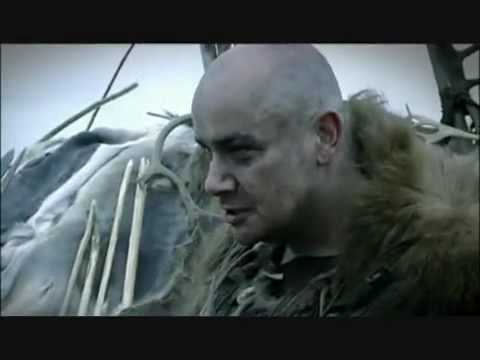


very good info, well put together - 5 stars
As an antidote to this film read An Indigenous Peoples' History of the United States by Roxanne Dunbar-Ortiz; Savage Anxieties: The Invention of Western Civilization, Robert A. Williams, Jr.(Lumbee); God is Red, Vine Deloria (Sioux) for starters. This "documentary " manages to completely gloss over the deliberate extermination of the First Nations and would have us believe that the uninvited invaders innocently wiped out the indigenes with germs only. Read history and the horrors that the murderer Columbus inflicted on the Tainos for a start. Then the numerous trails of tears. And now as we titter on our collective extinction due to the twin crisis--ecological and nuclear--brought to you by the European and their descendants--madmen-- let us remember their crimes of greed and racism.
Just brilliant. However, as someone pointed out, the title is misleading. There is a heavy focus on how Europeans influenced the Americas. I still enjoyed it. All that history crammed into an hour and a half. It didn't miss a beat. It's quite sad, and yet such a necessary step to the modern world we know today.
The potato and tomato was such an interesting thing to learn about. I'd always assumed that they were always accessible to Europe. Especially considering the stereotypes of the Irish and Italian. As an American of both Irish and Italian ancestry, I was tickled to bits to learn that these foods were not European in origin, among others.
I thought it was poetic how the Spaniards hoped to convert new Christians, and instead, killed them with the pox. And in the end, they assumed God paved the way for them. It just goes to show how corrupt man is with religion. Hundreds of years later, according to man, God is still hurting other men for your benefit. Christians, Jews and Muslims- all the same.
This was a beautifully presented doc.
I learned a lot.
It wasn't all about Europe, just explained what the conditions were that drove people to come here.
Graphics show the viewers what different parts of America must have looked like.
We see how the natives must have lived, what they grew, how they hunted and fished.
How they used nature to manage their crops and the animals they depended on.
All kinds of interesting material.
I thought it was very well done and educational, too.
Would love to see it shown in our schools.
they were doing great..........until the white man came!!!! lol
I thought this was about AMERICA BEFORE the Europeans. More than half of this goddamn movie is about EUROPE. wtf seriously guys?
I'm an european, but ashamed of beeing one, because of what they've done few centuries ago.
Shame on you europeans ! and spanish people and british people,etc.!!!
For all that matters, i wish the europeans have never discovered The New World, even if that means no tomatoes, no french fries, no cocoa and other good stuff T_T
Not good, not bad, not right, not wrong, just the way it was
Queen Isabella and King Ferdinand threatened my family with death, conversion, or exile. We were accepted by the Ottomans. The Sultan Beyazit "is said to have exclaimed thus at the Spanish monarch’s lack of wisdom: “Ye call Ferdinand a wise king he who makes his land poor and ours rich!”
We narrowly escaped the inquisition. Columbus had to leave from a swamp infested port because the normal ports were clogged with people escaping the inquisition.
There are no Native Americans. The so-called "Native Americans" came from Asia. Their migration was no different from Europeans other than their time of arrival. The so-called "Native Americans" were at war with each other well before Europeans arrived. War was glorified in the so-called "Native American" culture. They were NOT angels despite what this "politically correct" documentary tries to portray them as.
The concept of European agriculture as an artificial ecology and Native American agriculture as the management of natural ecology is a simple yet insightful idea which explains a huge number of differences between the two cultures. I remember reading from original sources how the colonists had trouble telling the Indian's gardens from the surrounding forest. That now makes perfect sense. Also very interesting to learn syphilis originated in the Americas. Totally surprised by that one.
Sounds all nice and rosy, the colombian exchange was good for who? I don't think the Americas benefitted, nor did the natives. Europeans and their capitalist ways exploited and destroyed a continent. But the real kicker is at the end when they talk about the melting pot of the races, which is code for brownies are made to be like whites and the main key to it all? Darwin and social darwinism! Whites and Europeans are a superior race! Oh, what a disappointment.
I need help with my homework and I am not sure what the answer is, anyone willing to help? The questions is:
Why was America transformed 500 years ago?
There is a great problem with how they have down played the genocide of the colonizing nations. Columbus is personally responsible for reducing the population of Haiti from 7 million to 600,000 in 6 years. Cortez wiped out the Aztecs. DeSoto raped and pillaged along his march from the southern tips of Florida up the eastern coasts and looping around. He was quite prowd to report the fact that he was not bringing supplies but rather stealing it from the native tribes he killed along his path. It is also well documented that the blankets with small pox were sent from Europe after the great epidemics with the intention of being given to the natives.
a sad reflection on colonial legacy and consumption patterns that are destroying our planet
A sad reflection of colonial legacy and an economic system which is destorying our planet.....
I think we could all look at this celebration of destruction and despair.
does anybody know what America was called back then ?
let me know
I haven't seen the documentary yet, but whoever wrote the above article does not have a clear understanding of English grammar. I hope that isn't a peek into things to come.
they raped the natural resources in america then, all the way until now. now we pay the consequences of a unsane society based on waste rape and ignorance
Does anybody know Christopher Columbus's geneology and who he married?
I was going to watch this one, but from the comments I have chosen not to watch it.
Some of these post are sad, too many people with too little knowledge. Of course there were people here before Columbus arrived; and it's not the "discovery" that is important to understand, it's the exchange. Were other Europeans on these continents prior to 1492--yes, but they didn't have the impact Columbus did because they didn't have the backing of a crown or the need to show results. It was the exchange of plants and animals that make this story vital to the creation of the modern world.
Now you can label it good, bad, or indifferent--that is totally up to your personal perspective, the major thing is to understand the big picture and then to learn from the mistakes and successes that went before us.
the comments here are almost as entertaining as the documentary
The first explorers knew nothing of glacial advance and retreat