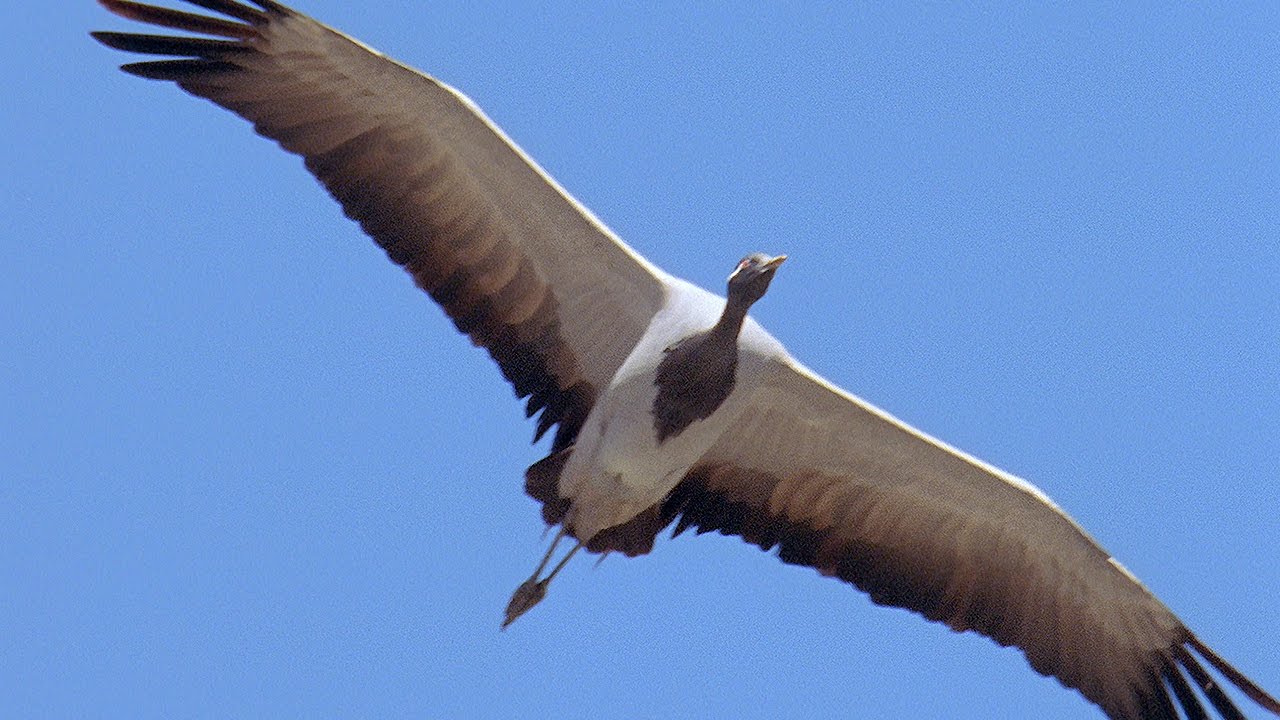
Planet Earth: The Complete BBC Series


With a production budget of $25 million, the makers of The Blue Planet: Seas of Life crafted this epic story of life on Earth. Five years in production, with over 2,000 days in the field, using 40 cameramen filming across 200 locations, and shot entirely in high definition, Planet Earth is an unparalleled portrait of the third rock from the sun. This stunning television experience captures rare action in impossible locations and presents intimate moments with our planet's best-loved, wildest, and most elusive creatures.
1. From Pole to Pole. The first episode illustrates a 'journey' around the globe and reveals the effect of gradual climatic change and seasonal transitions en route. During Antarctica's winter, emperor penguins endure four months of darkness, with no food, in temperatures of ?70 °C (?94 °F). Meanwhile, as spring arrives in the Arctic, polar bear cubs take their first steps into a world of rapidly thawing ice.
2.Mountains - This episode gives you a tour of some the many vast mountain ranges in the world, including the Andes and the Himalayas. It also shows the different animal species living in these mountainous environments, as well as footage of some of them doing things that have never been seen before.
3. Fresh Water - Although only three percent of the Earth is fresh water, there is no lack of animals living in those particular habitats. Fresh water has shaped the Earth while carving gorges, valleys, and great waterfalls, and in this episode, we witness the unique presence of distinct animals such as crocodiles and otters.
4. Caves - This episode introduces you to one of the most mysterious habitats in the world, where not many have ever been: caves. Also the only habitat not directly driven by sunlight, this episode shows you the many different, incredible creatures inhabiting them, including the various species of bats. Also introducing you to the different types of caves, from underground caves, to underwater caves, this episode brings Planet Earth to a fascinating end.
5. Deserts - This episode features the unique desert life on the planet, including animals that have to withstand lack of water. It also shows what these hardened creatures do in order to survive in such a barren environment.
6. Ice Worlds - Zooming in on the frozen wastelands of the arctic and antarctic, Planet Earth takes a look at the various animals that live there, including polar bears and different types of penguins. It also shows you that like desert creatures, these animals have certain skills that are necessary for survival in such harsh climates. Except this time, it's for survival in some of the coldest areas in the world.
7. Great Plains - This is an episode that introduces you to one of the largest land habitats on the planet which cover over a quarter of it, as well as animals that are some of world's largest. It also includes massive migrations and huge hunts made by some of the fierce predators that roam there.
8. Jungles - With incredible angles from high-definition cameras, this episode shows us the habitat which may only cover three percent of the planet's surface, but is home to more than half the species in the world, from how chimpanzees live, to the many different types of rare birds.
9. Shallow Seas - This episode follows certain creatures such as humpback whales in their journey for food in the shallow seas of the planet. It also takes a look at the teams of other aquatic life that live in these calm waters where sunlight reaches the seabed, including beautiful coral reefs.
10. Seasonal Forests - This episode takes you to the world of seasonal forests, where it shows you all sorts of different plant and animal species living there, from the enormous sequoia tree, to the nearly extinct Amur leopard. It also shows you that although the seasonal forests of the world may seem familiar to us, there are still many areas of it that are mostly unexplored.
11. Ocean Deep - There is much of the ocean that has never before been researched or explored, and this episode shows you some of that unexplored terrain, as well as some of the various aquatic life that live there.
Directed by: Alastair Fothergill
how do you get the exact locations of all the sites in the documentary?
top! wonderfull and inspiring films ons this site. it gives us all a insight in how adaptive and full of possibilities live is. but it also let you think of the way we act, and that we mussn't forget our live is essentially connected to this world in times in which we often forget the world we're living in. I find it a shame some people are just that indoctrinated to filter out the essence of these films, and no, for God's sake (maybe a bit unfortunate expression), it's not an interpretation! you could then say: well, I'm not indoctrinated, you are! and you would be right, because I am.. so are you, Everyone is! that's why everyone's different, it makes it who you are! Fine, but that's not the way you can prove things because to prove things you need to stop follow your believings, whitch are emotions, and focus on the elementary causations in what you see (action-reaction), otherwise there is no way of explanation! Pure logic it is! Still I i think this doesnt happen enough in research, where researcher's often have to much standard explanations (because of proven stuff) which exclude an other way of solve problems in generally! greetz
Awesome series. Even looked at the making of it, which was fantastic on its own. Totally caught off guard by some of the comments below and completely amazed at the thinking of some. It is beyond me how someone, anyone, can look at this with anything other than awe, admiration and wonder. My prayer is that you, who for whatever reason, have chosen to turn a blind eye to the wonderment of God's creation so much that you formulate conspiricy theories, find peace and joy in your own mind. Hopefully some day soon you can look at this again and see it for what it is. People with a passion for what they do, highlighting God's majestic creation which we have the privilege to be a part of. Great job guys! God Bless!
Watchec the series on the week-end - awesome!Beyond belief! Has forever changed the way I see the world. Blown away by it! Thank you. Thank you. Thank you to all the guys who helped to bring it to us.
the POWERS THAT BE use these images from nature to push their dark agenda. the science that is presented in this is out of date. the whole darwinian/freudian "might is right", "survival of the fittest" idea is simply a theory that has had its day. new insights in biology and zoology refute this worldview completely. while attenborough was implanting this depressing idea in many open minds...he was carefully avoiding speaking about the real issues...about Monsanto which has already made immense changes to the biosystem without proper testing and consultation. If Attenborough had worked to educate people on the dangers of these multinationals and the abuse of the earth and the ocean.....we could mobilize quickly and save the planet...instead.....he is too busy making a name for himself.....and being a darling son of the Empire.
Watched these Documentries by BBC on the planet earth i loved them back then and i love them today. It is as brilliant as it comes, amazingly clear explaination of all the act being conducted in the Forest or Jungle. Very informative, very exciting. Thanks a lot for posting the Doc here Mr. Host.
Hello, exellent serie, but i only can see the first video in HD, the other don't have the hd button.If anyone kwnow something will be appreciate. Thanks
i think that it sure to make life in europa and vostok the two moons because their is present of water which show that deep 24 km their is presence of atmosphere what is your opinion on that fact?
Wow is is an excellent work done by amazing people.
i really want an original version for my library, hope somebody gives it to me as a birthday gift someday!
We live on amazing planet. It's real shame that a lot of people out there place more value on human life than other beings. Scratch that, it's a damn shame.
I love this series :)
The conspiranoia fear monglers just pop up in the comments sections of pretty much any video these days, don't they? "Over population theory"? Really? Simply stating facts about human population growth in the introduction of the movie in the context that there still is so much we rarely see and know much about on the planet? There is a conspiracy section here, you know? Why not just go there?
This is the best effing site I've ever been to, whoever made it is a genius and my hero! cheers
And disrespect and insults have purpose or value here?? Thanks a lot dude.
Seriously? Dude, believe the unseen but shut up about it here. It has no purpose or value being posted here.
All?h (God All-Mighty) has created every moving creature from water. And of them are those that move on their bellies, and of them are those that walk on two legs, and of them are those that walk on four. All?h creates what He wills. Indeed, All?h is over all things competent. We have certainly revealed distinct verses. And All?h guides whom He wills to a straight path.--The Quran (24:45-46)
I became atheist watching David Attenborough's Documentals. He is one of my heroes. I love listening his voice.
fantastic!!
this documentary film was the great one than any other films that talks about the planet earth. the people is responsible to know and learn what is the needs of our nature and wildlife, remember nature and wildlife doesn't need us infact we human needs them to satisfy our expensive life. we have to conserved and protect the nature and wildlife because we human are the responsible why these wild and nature is so few today.
Wonderful natural science. Attenborough stresses the vitality of sun and water for life on earth yet his kind are blocking our sun with chemtrails, polluting our water with oil and cornering water as a 'commodity' controlling supply by demand; at any price. Unrivalled cynicism.
Attenborough (the borough of Aton) starts with the overpopulation theory and it's such a tragedy that this man is virtually the only voice 'authorised' with the huge budgets and technology to bring us such quality observations. BBC too, is staffed by Etonites. Elites hell bent on indoctrinating us into extinction whilst profiting hugely from oil and other devastating economic commodities. Supernatural freaks, the lot of them.
Wow, I love nature; all of it!
I love this series!
Yes I know that I'm starting to sound like an advert for the BBC, but Yes it is yet another superb doc by the BBC & Sir David Attenborough. It's not my fault that everything that they make is so good.
Lessons for humanity to take away!
Absolutely stunning!
Ocean deep isnt working.
But I have episodes 1-5 on dvd, unfortunately I cant for the life of me find part 2 in NZ dvd stores.
I love the series.
bbc remains the broadcast standard bearer - unparalleled!
Top rated 10/10, always loved Attenborough's narrative style, his voice is captivating, and he has an intrinsic knowledge of all the species he describes, which makes learning about them so pleasant.
It will be extremely difficult to replace this legend, I believe he has well and truly established himself in the history books.
Enjoy :)
if only this was shown to the powerful names who are responsible for the mass-harm of the environment, maybe our world would change.
Exhuastive research, cutting edge photography and to top it off David Attenborough's measured and informed narrative, a wonderful example of television at it's very best. Congratulations to the BBC and many thanks for your excellent website.
Amazing. Next step, Human Planet!
Murder of babies by predatory gangsters, not enough pollution reality, BUT I LOVED IT!!!!
the best ever i have seen from bbc thanks alot
Amazing, the bbc never fails to impress when it comes to documentaries and Sir David Attenborough is a legend.
All the links are broken for me :(
Wonderful series. I really enjoyed all episode. Thank you so much :)
Wonderful !
Fantastic!
One of, if not the best documentary's ever produced!
Wonderful series.
Ep 11 is from BBC Blue Planet, not Planet Earth.
Amazing and extraordinary documentary..I love that.
All based on great effort and deep research work.increasing our knowledge about the realities we dont know.such type of work should be continued..
simply amazing
So beautiful, it really is a must see
@Bustin Jeiber
Superior is the third largest lake in terms of volume and contains less than half the amount of fresh water of Bical. It is the largest lake in terms of surface area though.
David Attenburough plus the BBC makes an enjoyable experience. Many a first time seen events and animals. Prime documentary hopefully all will enjoy.
these series are simply amazing.watching all these beautiful things ,should motivate us to protect the nature and stop being so superficial and careless.great documentaries,congratulations and keep on posting docs
Great salute to such a wonderful docs. This makes us to act for conservation of our amazing ecology,mountains and environment in its entirity. Thank you Topdocumentary.
This is wrong on two counts, the largest fresh water lake is Lake superior and there are fresh water seals in northern quebec Canada.
I can´t get these to display in HD. I found them in perfect HD on U-tube. But david´s voice is too low so cannot watch them.