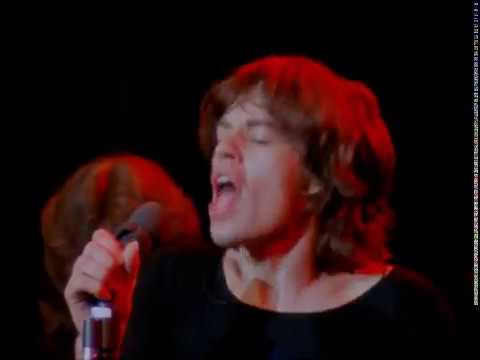
The Rolling Stones: Gimme Shelter


 The rock movie's very own Zapruder film, Gimme Shelter stands today as a landmark portrait of a band and a generation that changed the stakes between the two camps forever. What starts as an electrifying document of the Rolling Stones' performances on their fiery 1969 American tour switches to an inquiry into the satanic Altamont concert where Hell's Angels -- hired by the group itself -- effectively stomped out the last shreds of '60s Utopia.
Obviously, the Stones had no idea what was to happen at Altamont when they hired directors David Maysles, Albert Maysles, and Charlotte Zwerin. They simply didn't like how they looked a year earlier when Jean-Luc Godard showed them creating, and seemingly never finishing, "Sympathy for the Devil," in his lethargic, hypnotic same-titled film. The Maysleses and Zwerin fulfill their obligation to catch the fervor and brilliance of live Stones shows -- particularly in songs like "Honky Tonk Women" and "Street Fighting Man."
They also, in the process, happen to catch a fan being stabbed in a crowd, footage that they then run past singer Mick Jagger. This snippet makes Gimme Shelter cut deeper than any rock documentary: Jagger's bitter expression as he shakes his head at his own arrogance and naivete is a remarkable moment. Bouncing between the band's debauched tour lifestyle (including a shaggy, funny session mixing "Wild Horses") and the fateful, ultraviolent California show, Gimme Shelter lets it all hang out.
This 30th Anniversary DVD edition boasts a new, loud DTS version of the soundtrack, deleted scenes and radio excerpts from the live KSAN broadcast of the four-hour show, as well as a booklet of essays on both the tour and the cultural climate of the 1960s. This is a documentary and a document that is truly worthy of such elaborate treatment...

Can't play on LSD?? Grateful Dead's sound system designer manufactured LSD before it was illegal to possess, use or sell. His name was Stanley Owsley and if you never tried Owsley acid then you must sit down, shut up and never speak of the sixties again. It was powerful and many used it while performing. The man that was stabbed at Altamont had a large handgun and possibly discharged a round. Hells Angels moved in on him quickly. He made 3 mistakes: 1. He was black 2. He was near the Harley's 3. He was black.
The film immortalizes the California stupidity that to this day still thrives there. They are even arrogant about it! I cannot count how many times I have heard that Altamont "Signaled the end of the sixties". It being December 1969 makes that a fact dummy! I had not heard the term "Crank" but "Speed" was common and a far better high or buzz than "meth". "White Cross" were common and cheap. Commonly called "whites", 5 to 10 hits were a joy. Other amphetamines that were popular were "Black Beauties" the truck drivers favorite. They were also called "California Turn Arounds" meaning take one then drive your semi-truck from anywhere to the 'Left Coast', deliver your load, turn around and go home.
Dexedrine, known as "Christmas Trees" were triangular green and orange pills that 2 or 3 kept you up and feeling good for a couple days. After that you became easily irritated and fist fights would ensue. Needle users or speed freaks were common and many burned out quick and were prone to become infected with hepatitis C thus the need later for liver transplants. The Angels sold something that they called "Peanut Butter" but who knows what it was. You do not ask an Angel a question unless you are good friends or a patched member. They have their world and you are welcome if you can be cool. Act stupid and you are invited to leave or be "educated". Sonny is still the "Chief" and none will tell you anything. If you are a reporter they will tell you bullshit with a straight face and that is where the public is fooled and misinformed.
Sonny's first book is a good read with details about Altamont as is Pamela Miller's "I'm With The Band". The film also has some Burrito Brothers footage with Gram Parsons and Chris Hillman. Road manager Phil Kaufman;s book "The Road Mangler" is a must as he was involved in every legendary rock event or so it would seem. He was with The Burritos, The Stones, Emmy Lou and Zappa plus in 1960 a cellmate at Terminal Island of a young Charlie Manson. Phil is the guy who stole Gram Parsons body. He sells his book online for 5 cents.
1969 was the year The Stones found there sound. The Beatles used speed daily during their Hamburg days which led them to practice and play long hours, one of the keys to their success. Finally I must add that hippies were mostly jackasses and rude. Everywhere.
I really wish you could buy the soundtrack to this film. Here are some of my favorite versions of some Rolling Stones classics.
Here's an interesting thing to do: watch in rapid succession the Stones play "Sympathy" at the Hyde Park concert right after Brian Jones death; (2) at Madison Square Garden (at the beginning of Gimme Shelter movie); and (3) at Altamont (they just happened to be playing this song with it all hit the fan). In a the short period between Time 1 and Time 3, Sympathy sounds different, and better. That's my thought anyway.
the"re the greatest Rok'n roll band in the world!!!
Acid, possibly. .. "Crank", not meth.
lsd + meth = this movie
this was a great movie!! so intresting to see the band whatch their own show!