
The Story of the Weeping Camel


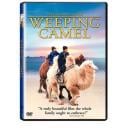 A nomadic family in Mongolia's Gobi desert faces a problem when a white camel colt is born in a difficult delivery and the mother rejects it. Repeated efforts by the extended family to get the mother to nurse the colt fail. The colt stands alone and cries for its mother. The family worries that the colt will not survive. Finally, Dude (Enkhbulgan Ikhbayar), the older boy, is sent to a nearby town to find a musician who can perform a "Hoos" ceremony.
Little Ugna (Uuganbaatar Ikhbayar) begs to go along. The two boys travel for miles across the desert, stopping at a neighbor's yert, where Ugna is delighted by his first encounter with television. They travel on to the village, and then return home with word that a musician is on the way. A musical ceremony is performed in an effort to get the mother camel to accept her colt.
The Story of the Weeping Camel is a blend of documentary footage and narrative. Filmmakers Luigi Falorni and Byambasuren Davaa cast a real nomad family of herders and shot many of the events in the film as they occurred. The Story of the Weeping Camel was selected by the Film Society of Lincoln Center and the Museum of Modern Art for inclusion in the 2004 edition of New Directors/New Films.
An absolutely beautiful story. Now withe entrance of TV their way of life will soon disappear. Soon we'll have a McDonalds
We watched it (accidentally) without captions and found it mesmerizing. Then we watched with the captions on and had an even deeper experience. This is a wonderful film for all ages......
Touching movie and this story encourages me to travel to Mongolia once in my life. Bucket list!!!
As of 10/26/16, I tried to play the video and a message pops up, "This video contains content from Lasso, who has blocked it on copyright grounds." Same thing when I tried to play it from Youtube. I just don't get it, why is this publishing company so STINGY that they won't even let us watch it, that apparently we have to go somewhere and BUY it to even see it? Don't they want to support their clients? How many out there would watch this, then go out and buy the dvd? If it is a wonderful as the above reviews say it it, I would buy the dvd from them! But I'm not buying it without some idea of what it is, so at this point, they lose revenue from me.... and I'm sorry for those who created it, they will lose whatever they might have earned from my purchase, though I'm sure the majority would go to Lasso! That being said, the very least Lasso could do (for their clients) is to include a link as to where one COULD buy the dvd! Just my thoughts....+
I adore Mongolia and this film near as dammit captured the amazing spiritual experience I had while traveling across this vast and untamed land. A beautiful and evocative look at a beautiful and unknown country, a true joy.
We speak a lot about our animals and how we do all that we can to make their lives healthy and happy. I first saw this film years ago shortly after it was released and it remains an all time favorite of mine. The dependency on the camels and their importance to this family make this such a pleasure to see and enjoy. Never tire of this film.
That was good
strange noises or the sent of a unknown person "the musician" will often spark the motherly instincts in an animal and help her accept the baby even tho nature is telling her its a target for a predator leave it to protect the herd. This is a very interesting film I loved watching it
Thank you Sally Anne for your insight and perspective. This is truly appreciated and leads to a better understanding of the film. What is remarkable is the fact that the camel (an animal) could actually cry after reconcidering rejecting her colt after a difficult delivery. Shows how judgemental us humans can actually be. Begs the question ; did the camel actually feel cared for by her human handlers that went out of their way to sooth her feelings with the beautiful music. Love works.
wow this was truly amazing! i would have never thought that music would have had such an impact! i guess it is true that music could soothe the savage beast!
That was a beautiful story and I am thankful to have seen it. Indeed music heals.
Great documentary. Worth watching. Music again brings a miracle.
Having nursed two "white colts" (human boys, actually) I can teil you that though I experienced great joy and comfort (it makes sore full breasts feel better right away when the milk "lets down,") nursing, birth COULD without support or experience for the mother be traumatic, .... and some babies also do not nurse after the trauma, for a day or so (One of mine was slow nursing after a forceps delivery where he struggled for life) ....
and letting down milk is EMOTIONAL: it brings a great RELIEF (cause for tears of joy) and also a great sense of warm emotion (I used to cry a bit when breasts were well-stimulated by my lover as an older teenager in love) ....
and when one is feeling very uptight or cold or angry, literally, the "milk won't let down," the breasts ARE a sort of "seat" of emotion. MUSIC has definite effects emotionally, and of course, the type, mode, tonaitly, melody pattern and emotional course of music is complex and must be developed. But our experience with music over the millenia has taught some of us which kind of music, and even which melodies tend to stimulate emotion. Some hymns make people emotional, and the ancient Greeks even had an "ethics" of music, using their various diverse "modes" (like "keys" and "major" and "minor" for us) and recommending, say, the key of G major for martial, military, patriotic music stimulating loyalty, marching, etc..... MUSIC has POWER, and very deep emotional power. THink how our contemporary movies would be without MUSIC. Sometime, don't listen to the film written for the movie: put it on mute and put on different music. You'll SEE !( Hear?)!
Can anyone clarify me why the camel let the colt suckle and started crying towards the end?
the Story of the weeping camel was peaceful , poignant joyful and sweet salty tears that they are a beautiful family camel and goat and the family how their love of children a hard life and beauty entwine, Caos Sinclair-Writer -composer - Actress
such a beautiful documentary...
Terrific documentary, I am so pleased to have found it. Such beautiful and gentle people, the story of the little camel and his mother was also touching!
I like the music, although I don't understand it and I like its hypnotic effect. It is amazing how love and songs can change situations. Good doc.
Hey, Imtiaz Rasool, with all do respect, you don't get it do you? You don't need god when you have the power of true love and communication to overcome any adversity. There is no higher spirituality than the desire to help others and pass on love and respect onto others: humans, animals, the whole planet. Why do you give god credit for what these people accomplished with incredible patience, love and healing touch? If your god or any other gods were capable of doing anything, why does misery, poverty, war, destruction, hunger, illness, sickness, hate and greed among 90% of the population on the planet persist? Please think about it? If the current state of affairs in the World was god's thesis, would you give him/her/it a PHD? I wish you much success with yours and I hope it does contribute to betterment of humanity and all.
Brilliant! I stand in awe of the film makers' talent, creativity and ability to put on screen the beauty of real life. It takes very special people to recognize the extraordinary qualities of this ordinary and incredibly beautiful family (human and animals alike). What an experience! Thank you!
I prefer that not tv.
I am actually Mongolian. But I used to live in a city when I was in Mongolia. The thing is I've never seen this things in my life even though i am Mongolian, because I live in town that's why, i guess. This Documentary is the best mongolian movie I've ever seen. I cried a lot when the camel was crying. What a beautiful story!!! What a beautiful people!!! What a cute child /Ugna/. Thank You so much for sharing this documentary. I appreciate a lot. :)
And I very proud of my country ;)
Thanks for Doc. I need to add two points:
1.When Respect is gone, Rehabilitation will never occur,
even a convict is a human being, because of his/her behaviour
he/she has a debt to society, and will pay for it, nothing more...
2. Structure of American society is harsh. It is based on money that brings power,
rich gets richer and poor gets prison. It's a vicious circle. The solution ?
Fly to Finland !
Amazing documentary.... we also had camels in our village and this video took me into my childhood days when we used to ride on camels back in the most remote area of my countary..my village 'Pamana'.. the people over there are the same as shown in this documentary simple, down to earth and honest... they used to relly mostly on the animals.... though we had a different landscape with mountains and lakes.... also there is no electricity in our village, no roads either... i some time imagen how my father came out of that rural area got education though he was raised as an orphen and finally became an electrical engineer and is working at a very high post in governement department and its because of GOD and the efforts of my father that i am doing my PhD in UK..... GOD is great..... I am with you CC i also loved the young kid he certainly will become an intelligent man....
It was beautiful that the mother camel and the child camel had renuion. The violin-like instrument was fitting and the woman's singing was exquisite. The child Ugna was active and expressive, and I hope he would grow to be an intelligent leader to his people--especially when he now can watch the TV, soaking up all the educational materials to his curious mind.
I'm with you, Linda! I really liked this doc. Surprising, in fact. I've always liked camels anyway.
@ David.
Aw man you are a pure sicko I loved that doc lol
;-*
How simple life could be ! it remind me of my childhood .
Great doc. thanks
Gorgeous gorgeous film!
Beautiful. The family stole my heart with both hands, thanks to this website I got to see a little bit of a life I would never have known.
nice doc...enjoyed it
What a beautiful documentary very moving and totaly enjoyable, I also love this site GREAT.
Linda, ;-*
Lovely.
Great Doc. What a sweet family. Love this web site.